
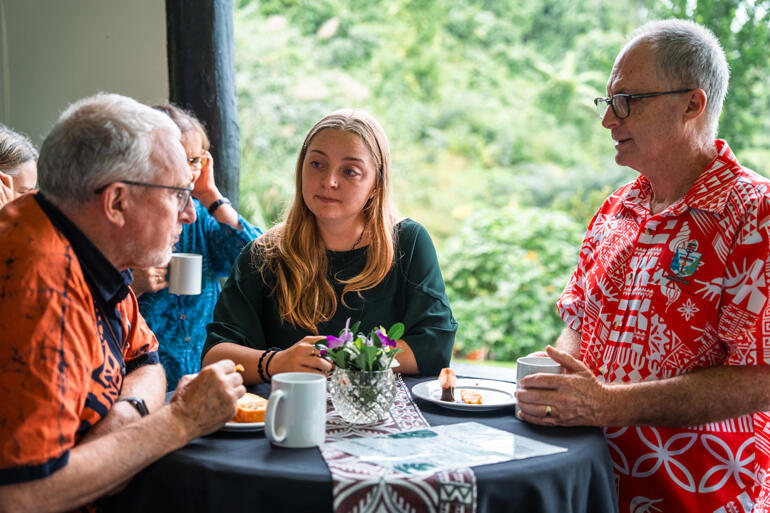
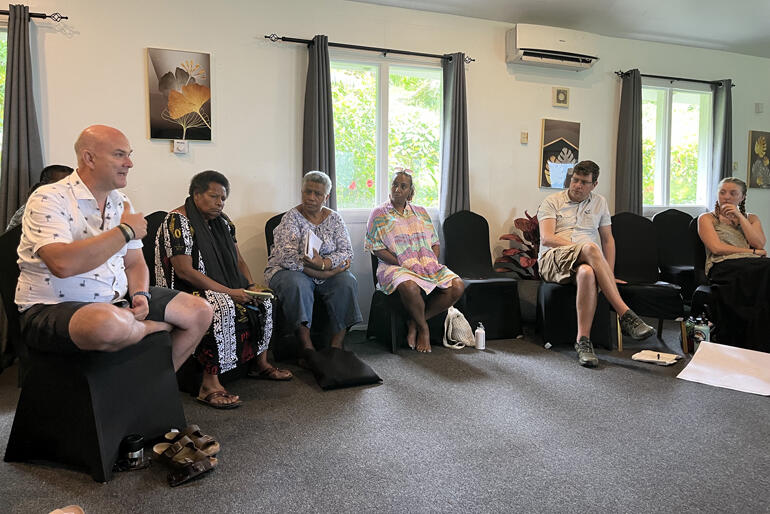
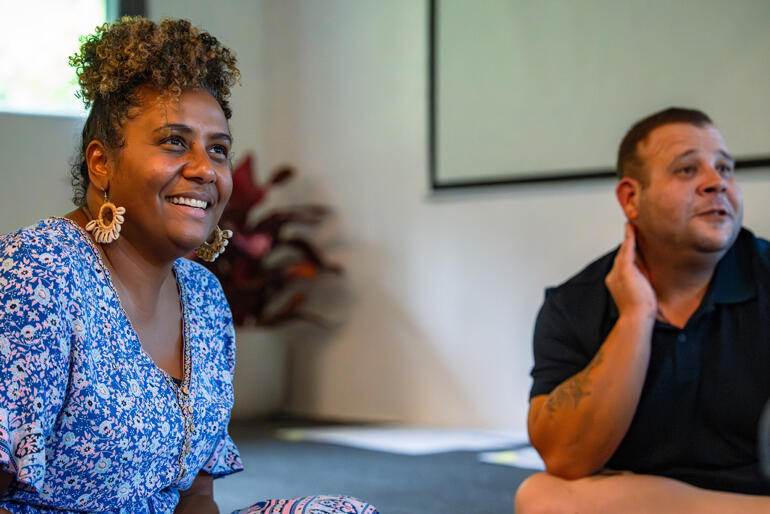
The 2026 Oceania Regional Advisory Committee (ORAC) brought leaders from Anglican churches and agencies across the Pacific and wider Communion together this April 21- 23, to forge strong development and funding relationships across Fiji, Tonga, Papua New Guinea, Solomon Islands, Aotearoa New Zealand, Australia and the Anglican Alliance's global office in the United Kingdom.
Strengthening relationships, forming partnerships
Held on Fiji’s Coral Coast, ORAC 2026 provided a space for Oceania regional Anglican partners to share how each group works with local churches and communities as they work to see their people's health, wellbeing and livelihoods flourish.
The conference looked at long-term programmes connected with agriculture, marine management, water and sanitation, and disaster-preparedness plans that build resilience as climate change creates conditions that jeopardise Oceanic peoples' water, food and housing security.
A clear pattern emerged where strong local relationships, clear communication, trained people, good planning, and an understanding of the specific risks facing each community all came through as important aspects for best outcomes in joint local-international work.
Anglican Missions' Director Michael Hartfield reported today that partnerships between Oceania's Anglican churches and agencies are in an exciting phase of renewal, with a number of joint programmes now in view over the horizon.
Anglican Missions has entered a renewed formal partnership with the Diocese of Polynesia and is in conversation with another Aotearoa New Zealand ecumenical aid and development agency. Looking across the ditch, Anglican Missions is on the cusp of forming a new partnership agreement with the Australian Missions Board and the Church of Melanesia.
Focusing on care for Creation
As well as providing space to forge new relationships, the meeting zeroed in on Creation care, particularly highlighting the Diocese of Polynesia's focus on oceanic health and plastic waste control.
Archbishop Sione Ulu'ilakepa opened the session by reflecting on the Anglican Church’s fifth Mark of Mission that calls Christians to 'safeguard creation and sustain and renew the life of the earth'. He highlighted the ocean's role in Pacific identity, theology and ecological knowledge and identified threats posed by climate change, seabed mining, plastic waste and increasing pressure on informal settlements.
Oceanic health and plastic pollution
Climate Commissioner Fe’iloakitau Kaho Tevi presented a vision of 'Koe moana, ko tautolu: We are the ocean', inviting the development teams to rethink the Pacific Ocean not as the empty blue space that separates our island nations, but as the living current that connects them.
Fe'iloakitau encouraged churches to equip both clergy and parish facilitators to support local Creation care work, such as mangrove planting and plastic waste removal and introduced a 50-day Eastertide training manual and resource kit to help parishes get started.
He highlighted campaigns where volunteers remove plastic pollution from beaches and waterways throughout the year, including the No Pelestiki campaign in Tonga and Vanuatu, which has seen schools, communities and church youth groups lead regular coastal and neighbourhood cleanups.
Shared priority: Clean water and sanitation
The ORAC conference found that a shared regional priority is upgrading water and sanitation facilities for rural schools and communities served by Oceania Anglicans. First steps include collecting sanitation data across Anglican schools and training local people to install and maintain upgraded sanitation systems.
Safeguarding, trust and gender justice
Sr Veronica Vasethe introduced ways to strengthen churches' and agencies' safeguarding practice across different contexts, including in remote and resource-limited communities. She led the meeting to ask how people working in each context need to investigate how safeguarding relates to trust, leadership and the use of power within church and community life.
An 'agents of change' session led by Annsli Kabekabe identifed next steps to establish safeguarding training and create clearer reporting processes, safer church environments and greater awareness of the different ways people can be vulnerable, including: children, young people, women, people with disabilities, staff, volunteers and community members.
The session on gender justice concluded that while language related to gender justice becomes complex across the region's distinct cultural and church contexts, all parties could find consensus on supporting programmes that promote dignity, safety and shared flourishing for women, men, young people and whole communities.
AI and ethical development practice
One session led by Kris Singh from Anglican Missions dived into the growing use of artificial intelligence in church and development work, pinpointing its values and its shortcomings for summarising documents, drafting reports, organising notes, generating ideas and reducing administrative burdens.
Speakers raised cautions on the use of AI, particularly the risks connected with privacy, consent, data security, environmental cost, lack of cultural knowledge, misinformation, and replacing human judgement with automation.
The group discussed in depth where AI may be useful in development practice, and where it should not be used to replace human relationships, pastoral care, local knowledge or moral judgement.
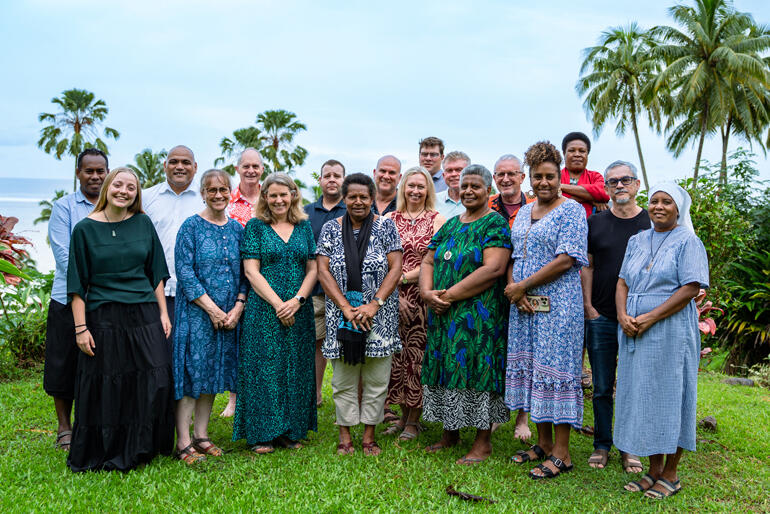
Pictured in the group photo the ORAC meeting 2026 above are: (from front row,L-R): Phoebe McLean (Anglican Missions), Dr. Elizabeth Perry (Anglican Alliance), Sarah Newnham (Mothers' Union), Mother Dorothy Siep (Mothers' Union), Katie Drew (Melanesian Mission UK), Ethel George (Anglican Church of Melanesia/Anglican Overseas Aid), Larissa Minniecon (Anglican Board of Mission Australia), Dr. Paulo Ueti (United Society Partners in the Gospel), Sister Veronica Vasethe (Community of the Sisters of the Church - Anglican Church of Melanesia),
Middle row (L-R): Rev. Nelson Bako (Anglican Church of Melanesia), Taniela Koloamatangi (Diocese of Polynesia), Rev Michael Hughes (Anglican Missions Board), Rev. Cameron Burr (National Aboriginal and Torres Strait Islander Anglican Council -NATSIAC), Mark Mitchell (Anglican Missions), Rev. Dr. John Deane (Anglican Board of Mission Australia), Brother Christopher John (Society of St Francis)
Back row: Robert Dawes (Anglican Alliance), Petra Goviro (Anglican Church of Papua New Guinea).








Comments
Log in or create a user account to comment.