

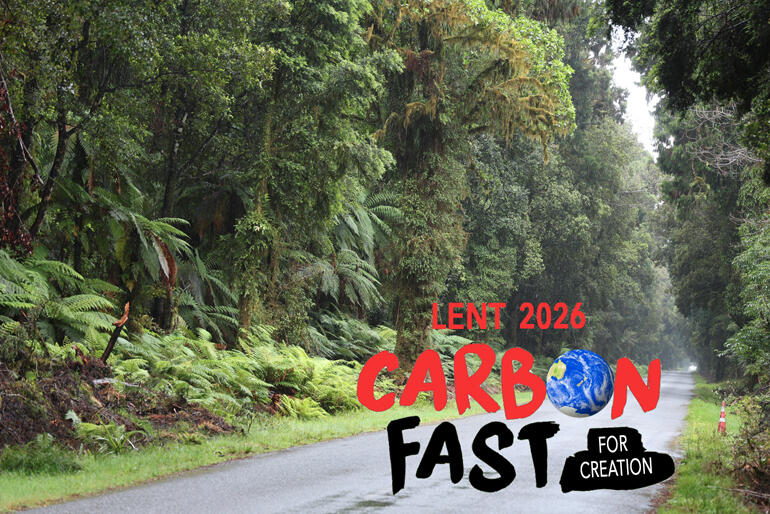
Carbon fasts are becoming a staple of Lenten observance in ecologically-minded churches round the Anglican Communion, as advocacy and action on oceans, forests and glaciers – known as the "Lungs of the Earth" increases in churches alongside local actions to care for waterways, plant trees and reduce plastic pollution.
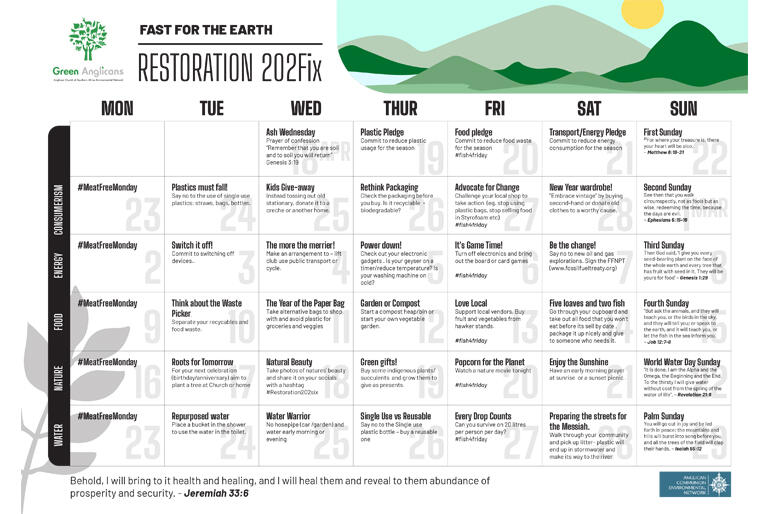
In 2026 the Anglican Communion Environment Network (ACEN) is encouraging churches to use a daily Lenten calendar to help Anglican families and communities care for creation with small acts of ecological mercy over the forty days of Lent.
The calendar starts off strongly with the first three days urging pledges to reduce plastic, reduce food waste and switch to carbon-reduced transport.
Throughout Lent 2026 the calendar then calls for celebration, reflection, or practical action on the needs of God's earth, from "Remember you are soil and to soil you will return" for Ash Wednesday, to earth-thankful scripture for each Sunday, and on to "Sign the fossil fuel non-proliferation treaty," "Use only 20 litres of water today" or "Set up a compost bin in your garden."
Meanwhile thirty-plus Anglican eco-churches from Auckland to Invercargill have received a simpler invitation from A Rocha Aotearoa New Zealand that suggests five ways to carbon fast this Lent:
1. Go Low-Waste: Choose a week (or the whole season) to reduce rubbish - especially plastics.
2. Creation Walks: Take a weekly reflective walk in a local bush track, awa, or coastline, pick up rubbish as you go.
3. Eco-Friendly Eating: Try going meat-free for a day/month or the whole season. Eat only from local sources for the season. Choose eco-friendly chocolate this Easter for you and your church.
4. Buy Nothing New: Practise simplicity by repairing, borrowing, or op-shopping instead of buying new.
5. Volunteer: Turn up and participate at a local conversation project – learn, help, grow.
Speaking at the United Nations Environment Assembly in December 2025, Anglican Communion Environmental Network lead Rachel Mash advocated for faith communities to take a lead in healing for creation.
Rachel quoted renowned US environmental Lawyer Gus Speth who determined that the root problems causing planetary damage cannot be explained by scientific categories such as climate change, biodiversity loss, or plastic pollution alone, but come down to basic human vices such as greed, selfishness and apathy.
That means that along with Indigenous peoples, Speth and many other experts in environmental action believe faith communities have the resources to address creation care intrinsically linked to their own core values and sense of the sacred.
"Faith communities can offer faith-based education for behaviour change, mobilise millions of volunteers, and think intergenerationally, viewing nature as a sacred entity to be cared for rather than exploited."
To participate in a faith response to care for Creation this Lent, you can download and follow the Green Anglicans Lent Carbon Fast Calendar here.
For more ideas from A Rocha Aotearoa New Zealand go to: A Rocha Aotearoa New Zealand












Comments
Log in or create a user account to comment.