

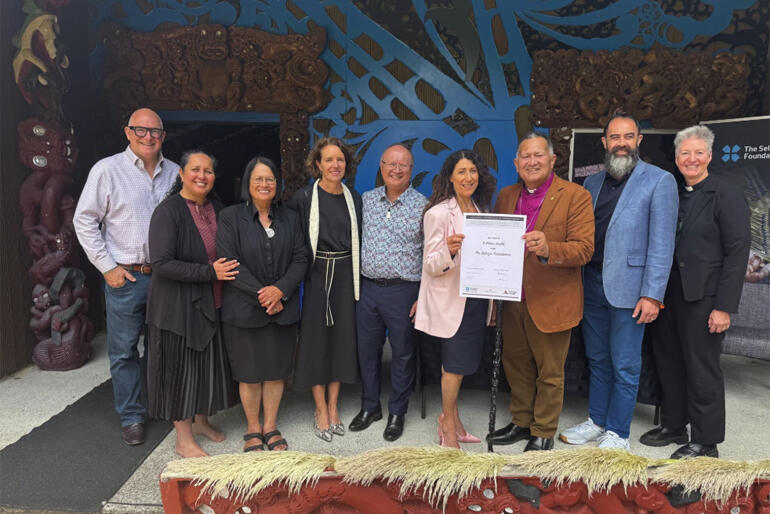
Te Kōhao Health and The Selwyn Foundation have celebrated a new health partnership following the purchase of a single-storeyed residential villa in Kirikiriroa (Hamilton) that will be purpose-refitted as a whare dedicated to Māori-led dementia care.
The partners signed a memorandum of understanding to develop the project together as it launched on 24 March 2026. The memorandum links together Te Kōhao Health, a mātauranga Māori-led health provider headed by Managing Director, Tureiti Lady Moxon, and Auckland-based Anglican Trust dedicated to elder care, The Selwyn Foundation.
Mana whenua Ngāti Mahunga led the ceremonial turning of the sod for the project launch which was blessed by both Archbishop Emeritus Sir David Moxon KNZM GCStJ and Bishop of Te Hui Amorangi ki Te Tai Tokerau Rt Rev Te Kitohi Pikaahu.
Once complete, the renovated and refurbished whare will become the first dedicated kaupapa Māori day centre for mate wareware - dementia that’s been designed with Māori for Māori.
The whare will provide day-time respite care, supported by experienced kaimahi who are well versed in caring for whānau with mate wareware. This will enable whānau who are caring for loved ones with dementia to take a break, while knowing their kaumātua are safe in a familiar and culturally-grounded environment.
Te Kōhao Health Managing Director, Tureiti Lady Moxon said the service responds directly to the reality that many families care for their loved ones with dementia at home.
“Whānau often look after their own. They carry that responsibility with love, but it can also be exhausting,” she said. “This kaupapa is about finally giving whānau a break during the day. A chance to replenish themselves so they can continue caring for their loved ones.”
The new Te Whare Mahara - Wellness Centre in Kirikiriroa is the first of several The Selwyn Foundation is looking to develop in partnership with Iwi and Māori provider organisations.
“Our partnership with Te Kōhao Health to deliver this new kaupapa Māori wellness centre is a major step towards our shared goal of providing place-based and culturally appropriate care and support, as well as respite for family, which are essential in enabling older people to age with dignity and respect in their own homes and communities,” said The Selwyn Foundation Chief Executive Denise Cosgrove.
“The Selwyn Foundation is proud to partner with Te Kōhao Health in providing this much-needed service, that will positively impact the lives of kaumātua experiencing mate wareware - dementia, and we look forward to the start of operations at the new centre in the months to come.”
Giving whānau even a few hours during the day to rest, run errands or simply breathe can make all the difference to the care their loved ones receive at home.
Dementia is a growing challenge in Aotearoa. Māori experience dementia around eight years earlier than Pākehā, and around 4,500 Māori currently live with dementia, although many cases remain undiagnosed because care often occurs within whānau settings.
By 2050, Māori dementia cases are expected to rise to around 12,000, but access to culturally appropriate dementia care remains limited across Aotearoa.
The Kirikiriroa initiative aligns with the findings in the 2019 kaupapa Māori research led by Dr Makarena Dudley and colleagues undertaken with 223 kaumātua across seven regions including eight whānau in Waikato.
It found that aroha, manaakitanga and cultural connection play a critical role in supporting people living with dementia and their whānau.
Lady Tureiti said the programme will continue to evolve with input from the community.
“We want to work closely with our kaumātua and whānau to shape what happens inside this whare, the activities, the environment and the care so it reflects what our people need.”
“This is about creating a place where our kaumātua feel at home and our whānau feel supported.”












Comments
Log in or create a user account to comment.