

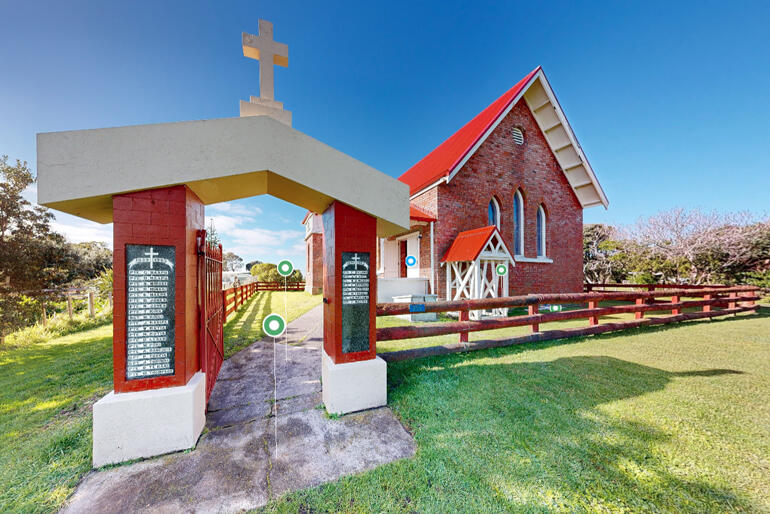
Unlike most small churches in rural communities across Aotearoa, Pātoromu Church in Whāngārā can now share its rich and fascinating history in detail online, embedding the voices and stories of its people within a 3D scan of the church building.
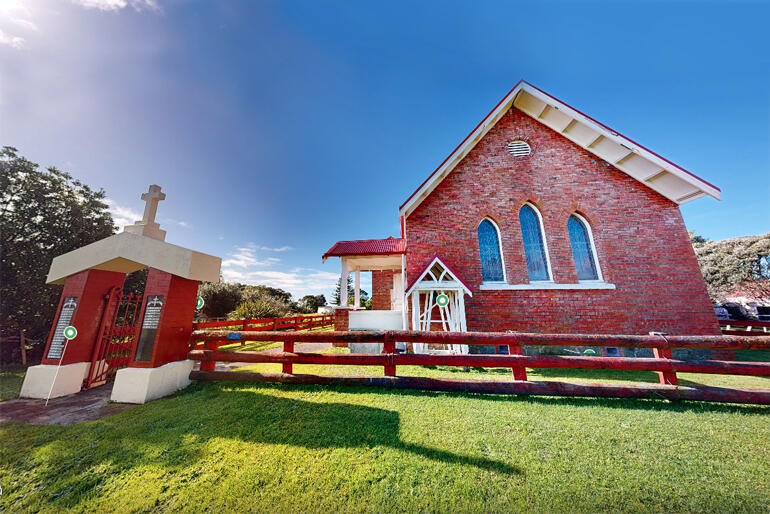
Dedicated to Saint Bartholomew, Pātoromu Church was chosen by 'He Taonga Tuku Iho,' the Anglican histories project, as its first virtual scan. Pātoromu demonstrates how small and rural churches contribute to the wider Anglican story, and the stories told by congregants highlight this particular church's role in its community over almost a century.
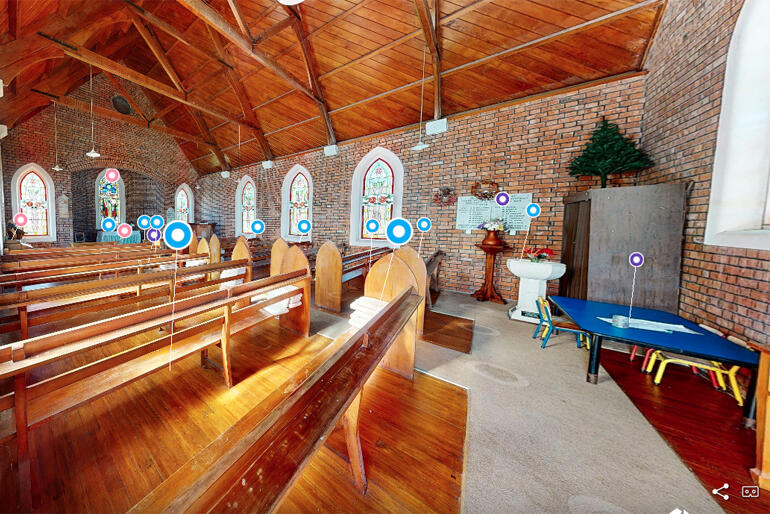
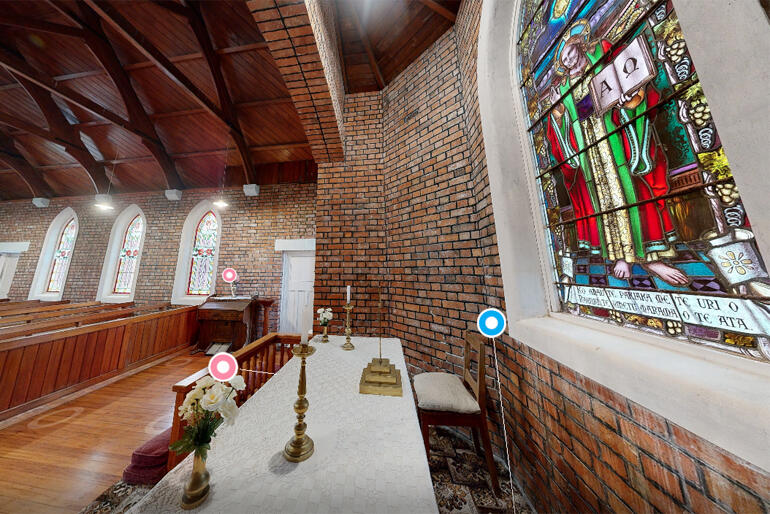
In this project, the local voices sharing the church's history are linked to a highly detailed interior and exterior 3D scan of the church, created using Matterport technology. This enables visitors to navigate into a digital twin of the church around both interior and exterior locations.
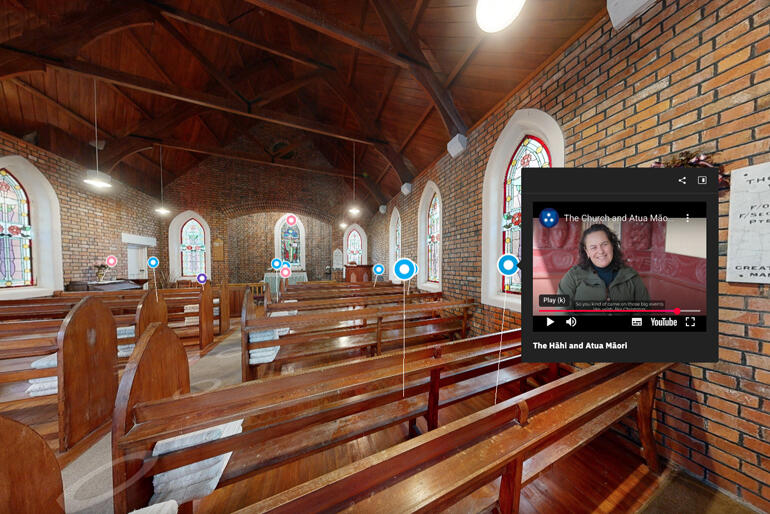
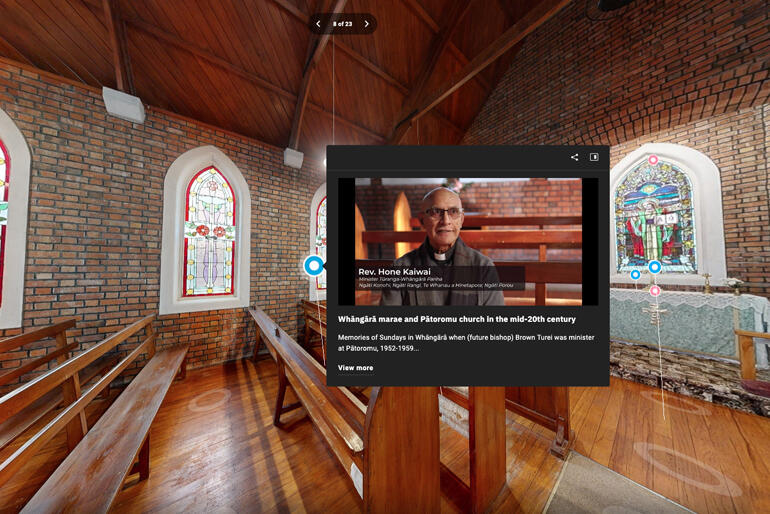
Coloured tags pinned to key church features such as the font, windows, altar, pews and memorials contain videos, photographs, music and other historic content. Videos feature local leaders who share their memories and present-day reflections on the life of the church, its people and the whenua on which it stands.
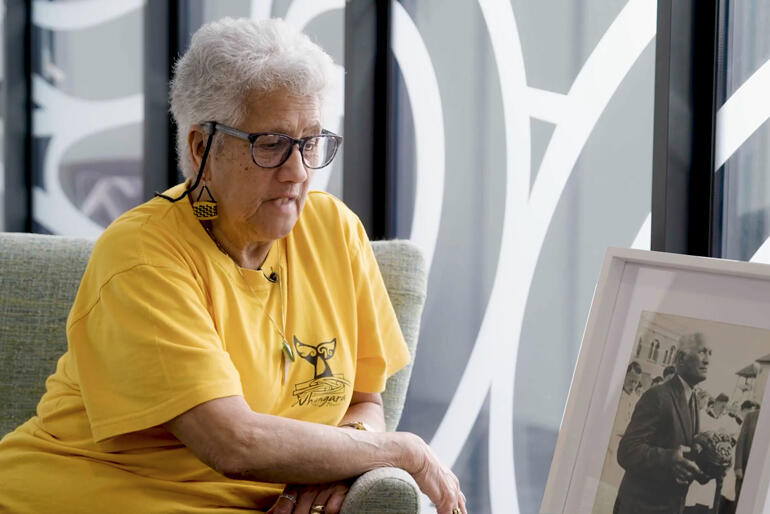
Visitors can find interviews with Tā Derek Lardelli, who sets the church's story within the kōrero tuku iho (inherited oral geneaologies and histories) of the Whāngārā area, and Ope Maxwell, who speaks of her father, the late Te Hira Paenga, whose lay leadership at Pātoromu Church covered at least 12 years of service across two long periods when no priest was employed for Whāngārā. One of Te Hira’s sons, Te Keepa, went on to serve as minister at Pātoromu for almost a decade in the 1960s -70s, and one of his daughters, Hinemahi Paenga, spent years leading committees and fundraising for Pātoromu. Her own daughter, Arihia Mataira, spoke to He Taonga Tuku Iho about Hinemahi’s decades-long contributions to Pātoromu.
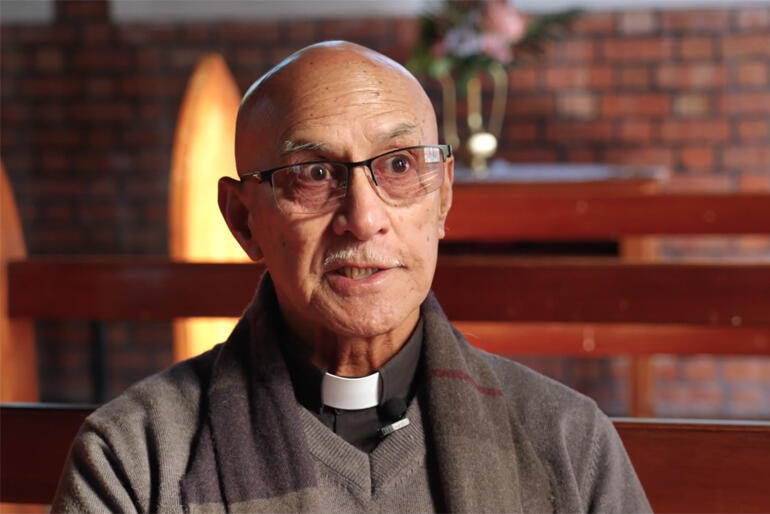
Current Minister of Tūranga-Whāngārā Pariha, the Rev Hone Kaiwai, speaks on several features of the church and its life, from his own childhood growing up in Whāngārā during the 1950s, when Pātoromu was at the heart of community life in town, to reflecting on its monthly services and large community gatherings for Easter, ANZAC day and Christmas today.
Rev Hone especially remembers the late Archbishop Brown Turei's service as priest at Pātoromu from 1952-59. Back then, Rev Brown led prayers on Sunday mornings, then spent hours leading tamariki and rangatahi in kapa haka practice at the marae down the road, deepening their understandings of tikanga and te reo and building up oranga ake (human flourishing) within the community.
"The marae and the church were one. So we were all like one big family," recalls Rev Hone Kaiwai.
At the war memorial tag, a trustee of Whāngārā Pātoromu's land block, Annette Wehi, shares her perspective on how Māori views of the church and spiritual matters have changed, reflecting on the relationship between Hāhi and Atua Māori, and the strong ongoing community ownership of whakapapa honoured within Pātoromu's walls.
Annette looks back at the way people in Whāngārā integrated their understanding of Christianity and traditional Māori views of the spiritual realm when she was growing up in the 1970s-80s.
"We knew that there was Atua, we knew that there was a Jesus, but we also knew that when we went to the moana to dive or go fishing, well, Tangaroa was in charge.
So in our minds they kind of co-existed."
Central to the success of the project was researcher Kauri Tangohau, who has whakapapa to Whāngārā and has whānau living there today. Kauri is also a fifth generation mokopuna of the Reverend Wi Te Hauwaho Tangohau, Whāngārā Pariha's minister during the years Pātoromu was being built, who then served as its minister for its first 20 years up to 1948. Kauri's work on the project included making contacts with community leaders in Whāngārā, organising travel and tikanga, and undertaking an interview in te reo Māori and subsequently translating it. He can also be heard accompanying the congregation on guitar in the tag attached to the church’s organ.
Project historian Dr Genevieve de Pont is pleased at the way the church scan reveals Pātoromu’s emotional and social history through the words of local people. She says that while it won't be possible to scan every Anglican Church around the motu, the dream is to gather a small representative collection across tikanga and regions to help visitors gain deep insights into what these sacred places have meant to the communities they serve.
The virtual visit to Pātoromu Church is available to view now on the website of He Taonga Tuku Iho linked below.
Tour the 3D scan of Pātoromu Church in Whāngārā.
Learn about He Taonga Tuku Iho’s 3D church scans.
Read more about the He Taonga Tuku Iho project.
For more information about visiting or supporting Pātoromu, or to share your story of being there, please contact Rev Hone Kaiwai on honekaiwai(at)gmail.com











Comments
Log in or create a user account to comment.