

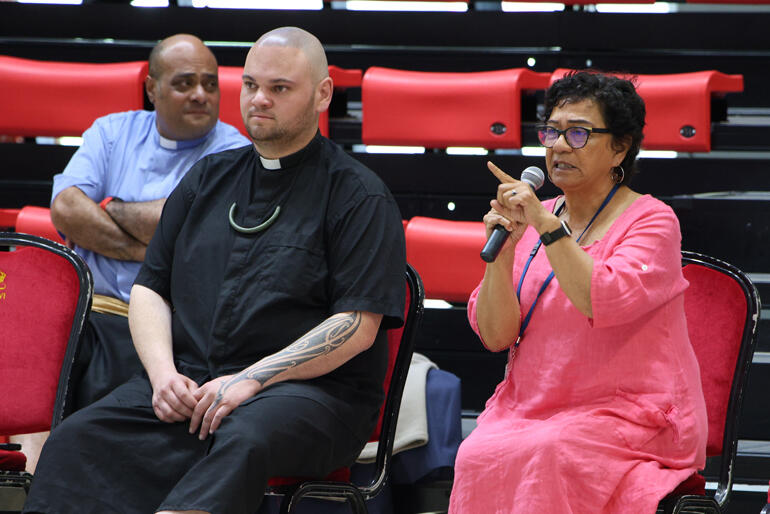
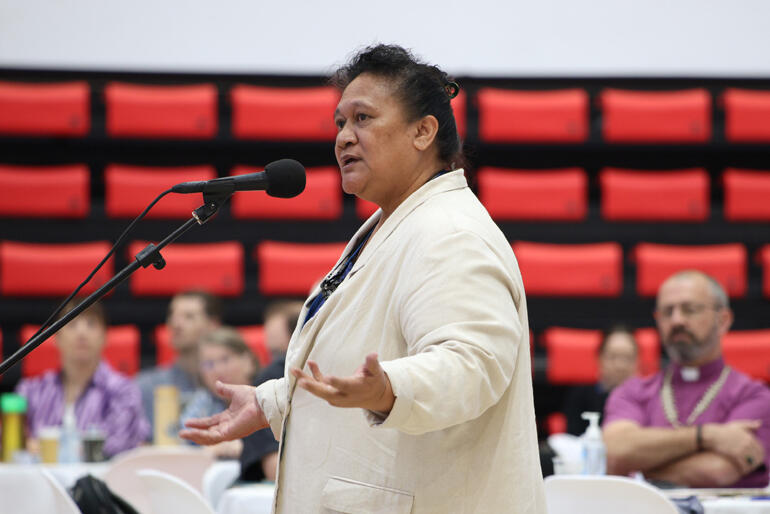
General Synod's climate resilience talanoa this August began with three truths on climate resilience for Anglicans to get their heads around the challenge:
1. Climate resilience is about the ability of whole communities, cultures, human knowledge systems and ecosystems to withstand and recover from climate impacts.
2. Although the current conditions caused by humanity's polluting damage to our climate and to creation are dire, despair is not a theological option.
3. Our Christian faith, our theology and uniquely for this region, our indigenous Pacific traditions, hold within them hope, resilience and transformation.
Changing the climate story: from victims to leaders
Pacific Conference of Churches General Secretary the Rev James Bhagwan opened with that definition of climate resilience, as he set out how the Pacific churches' shift in language from 'vulnerability' to 'preparedness' has moved Pacific people's self-understanding from 'victims of disaster' to 'leaders in climate resilience'.
"Resilience prepares communities to transform, to survive, and to flourish." he said.
"But shifting our focus to resilience must never release those causing the crisis from responsibility." he said.
Climate resilience needs funding
James Bhagwan asked Te Hīnota to heed the repeated calls of Pacific nations at UN COP meetings that seek climate reparations from the biggest polluter countries to fund resilience work for those most affected.
He made clear that climate resilience cannot be a sideshow tacked on to the Church's main mission, but needs to influence the shape of that mission too.
"We need to ask: how will climate resilience shape our worship, our formation, our budgets, our property, our advocacy, our pastoral care?" he asked.
Good planning reveals community resilience
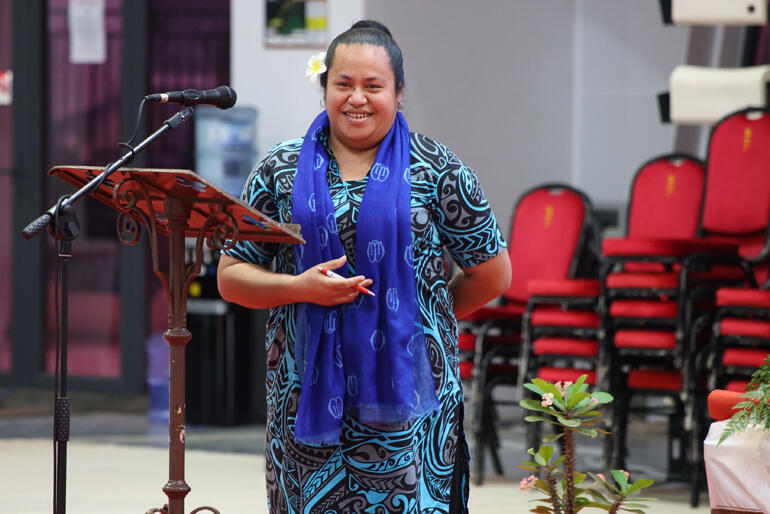
Anglicare Polynesia Programme Coordinator, Namuaimana Matalavea explained how the CIRA-GIS (Community Integrated Resilience Assessments - Geographic Information System) mapping training has already proven valuable in the Diocese of Polynesia, saying it helps people be ready to respond to climate-driven crisises with the resources they already have.
"In one of the assessments and action plans here in Tonga we identified that there were a few parishioners who were working in the medical field, so we had nurses... that meant, in times of disasters, instead of having to wait for the ambulance, we then can identify that right next door, or three doors down, we've got a qualified nurse, and we've got a doctor around the other corner." she said.
The advance-planning through CIRA-GIS assessments, which Anglican Care Polynesia leads, also identified parishioners who were skilled in IT and could get communications up and running again after a disaster.
"There's another training that has been brought in with all this assessment, and it's to do with counselling." Mana said.
We now have about 5-7 trained counsellors here in our team in Tonga."
Anglican Missions can help communities prepare
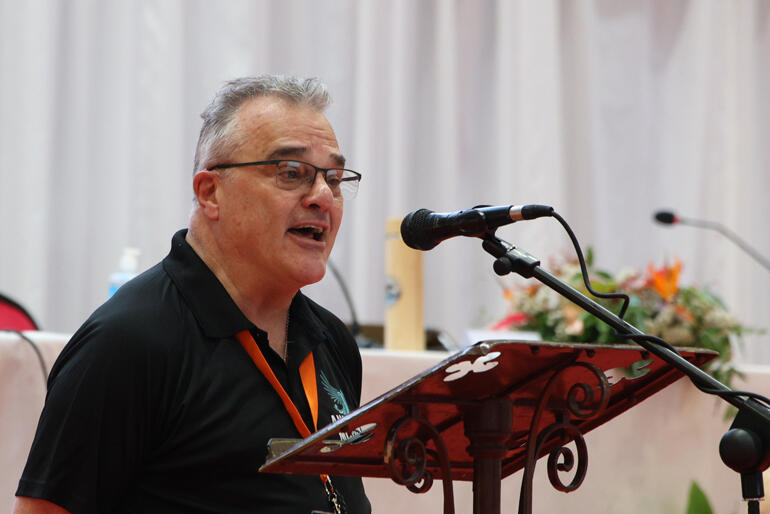
Rev Michael Hartfield from Anglican Missions (AM) told Synod that partnerships between AM and communities across the Pacific are enabling people to strengthen their resilience to extreme weather, salt water inundation and food insecurity.
He assured Synod that bills and motions passed in Nuku'alofa will be picked up by agencies like Anglican Missions and Christian World Service who will operationalise and put those legislative frameworks into action, in partnership with the three tikanga Church.
"Anglican Missions is our very own agency for turning faith, relationships, and generosity into practical action. Both here in Tonga, in the rest of Polynesia, in the Pacific, like Papua New Guinea, in Aotearoa New Zealand, and across the world." he said.
Rev Michael went on to affirm that all of Anglican Missions' supported projects address climate change issues in some way.
"Caring for Creation – Mark of Mission Five – is an environmental, spiritual, and political ambition for all of us. It is also an existential one...and to meet it we connect, we strengthen, we advocate, and we respond." he told Synod.
Michael Hartfield encouraged Anglicans to understand the church's vital role in caring for its community, which cannot be replicated by agencies coming from outside, who depart when the first stage response is done.
"The church, like the marae, is there before a disaster happens. It's there during a disaster. It remains there after every other agency has left."
Michael pointed to another Pacific-led resilience strategy close by.
"On Friday, come and look at what these parishes in Nuku'alofa are achieving (with their community gardens)." he said. "It's exciting, it's groundbreaking. It's transformational."
Supporting medical resilience in Papua New Guinea
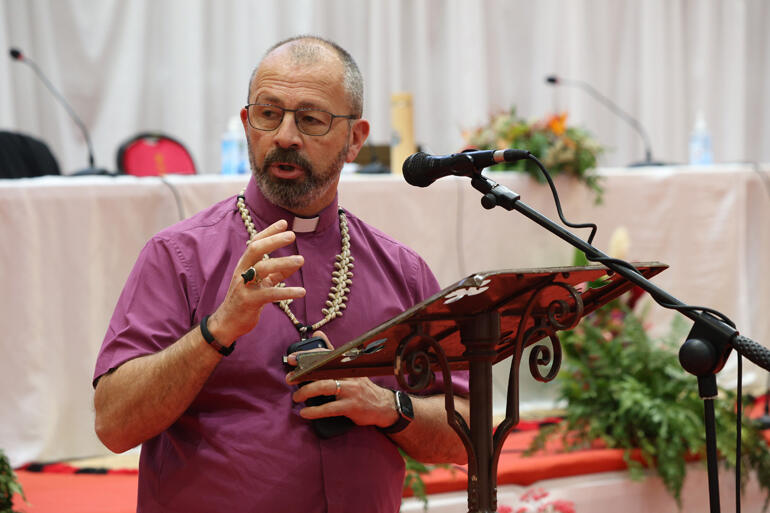
Bishop of Waiapu Andrew Hedge (who is a trained paramedic) recently joined Anglican Missions in Papua New Guinea where two village communities planned for disaster resilience for their health staff and hospitals.
"Those plans were around anticipating and reducing risks, strengthening local leadership, protecting the lively and rich life of churches and homes, and providing guidance on how to respond well when a disaster occurs." said Bishop Andrew.
One outcome there was a focused response which moved medical staff from having to work by the light of their mobile phone torches after a disaster, to an emergency lighting system ready to go.
Drawing on traditional Pacific wisdom
The Rev Winston Tarere introduced a traditional Fijian story about the time a man put one small bird into an earth oven which then fed 100 people at a feast.
"How can we change the mindset of our people so that we find abundance in scarcity, that we can actually feast on scarcity?" he asked.
He said that in the Pacific many people have forgotten some of their "ancient intelligence" and instead taken on a Western commercial idea that peace and abundance means extravagance and luxury.
"We think we have to have "this much" to be able to satisfy ourselves, and that drives the development model and capitalism that we face today, and the lifestyle approach that many of our people are now adopting." Fr Winston said.
"As soon as we adopt that mentality and lifestyle, we are becoming our own worst enemy... and contributing towards the destruction of our environment and our planet."
"How can we then adapt from our own indigenous wisdom, and put that into frameworks that become something that we can use in our theology of resilience?" he asked.
Talanoa welcomes many voices
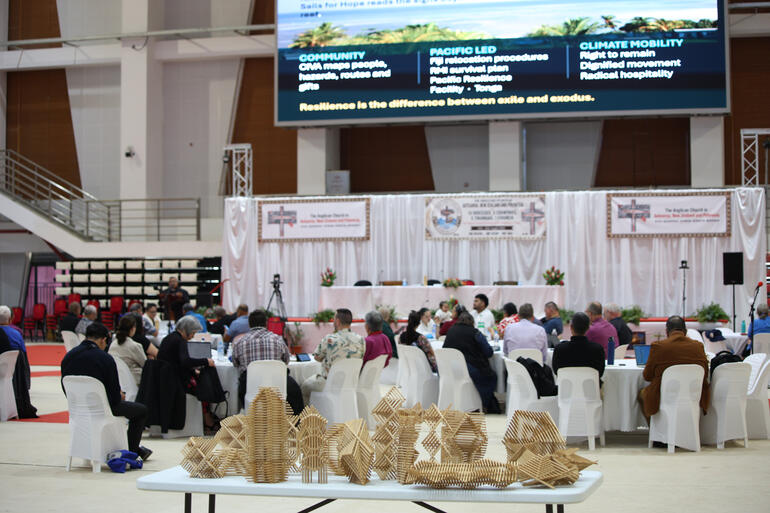
Synod's climate talanoa finally moved into a traditional conversation circle made up of the entire General Synod, including its observers and Tongan hosts where any speaker could raise their voices with questions, ideas or stories on next steps forward for climate resilience work by the Church.
The following day the 2026 General Synod Te Hīnota Whānui passed a climate resilience motion unanimously.
* Rev James Bhagwan's three aspects of climate resilience for the Anglican Church came out of the 2023 Moana Water of Life conference hosted by the Diocese of Polynesia with support from Kurahautū - The Archbishops' Wayfinder Unit.











Comments
Log in or create a user account to comment.