

The St Stephen’s and Queen Victoria School’s Trust Board has been given more elbow room in the way it manages the properties it looks after.
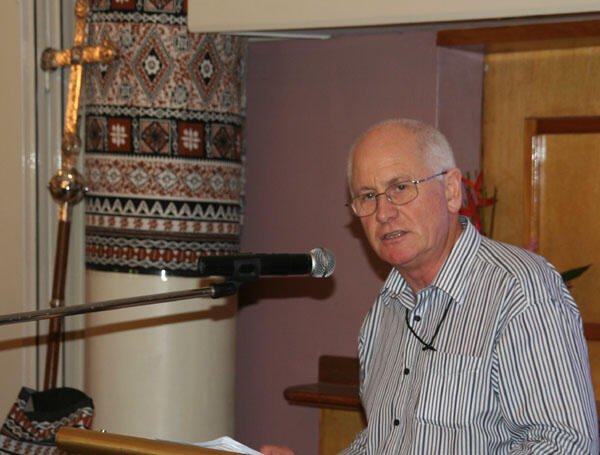
The board’s chairman, the Rev John Fairbrother, told synod yesterday that after three years work the Board had cleared the debts it inherited, was now “in a cash positive position” and ready to focus on the road ahead.
The board is intent on returning to being “a financially sustainable, active provider of education for young Maori” as soon as it can.
But with 63 percent of its property assets tied up in the famous but long-since shut schools, it needs the freedom to be able to get a return on the land on which the old schools sit.
“If schools are to be reopened,” said Mr Fairbrother, “and if neither of these sites prove to be appropriate to that end...then it becomes important for the Board to have the option of leasing these sites for much longer periods.”
What’s stopped them is that the Anglican Church Trusts Act of 1981 spells out that church school land can’t be sold, mortgaged, or leased for a longer term than 21 years.
And while property developers are willing to invest heavily in new buildings and infrastructure on leasehold land, they are only be willing to do so if they can be guaranteed long-term leases – so they in turn can get a satisfactory income from leasing any buildings they erect.
Mr Fairbrother explained that giving the board the ability to enter into longer leases would retain board ownership of the school sites “while liquidating a greater amount of funds from the properties than is possible under the current 21-year restriction”.
The big question, of course – and the one that keenly exercises the minds of Tipene and Wikitoria old boys and girls – is whether, like the phoenix, new schools will arise from the ashes.
Mr Fairbrother told synod that the board was not yet ready to declare its hand there.
It has embarked on a feasibility study on both sites that will take 12 months to complete.
“The overarching purpose,” he said, “is to determine, once and for all, what is the potential for reopening, in some shape or form, either or both schools, or new school site, with long-term financial sustainability, to meet contemporary and projected need in line with the board’s stated purposes.
“The intention is to acquire and collate sufficient qualified information to enable the board to return to being a financially sustainable, active provider of education for young Maori as soon as may be practicable.”












Comments
Log in or create a user account to comment.