
General Synod Te Hīnota Whānui has unanimously approved a motion on this Church's response to violence in Palestine and Israel, which calls for action against Zionism when used by Christian churches to justify continuing attacks against Palestinians by extremist settlers and the state of Israel.
Motion 8 highlights the need for Christians to stand up for peace and justice in the face of Israel's state military violence and relentless oppression of the people of Gaza, increasing violence by Israeli settlers against Palestinians in the West Bank and East Jerusalem, the intensifying pressure on Christian communities in the Holy Land, and the rise of Christian Zionism.
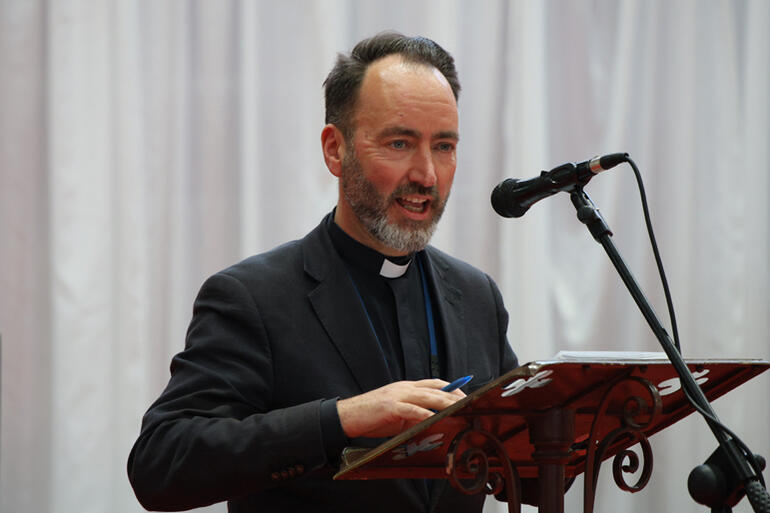
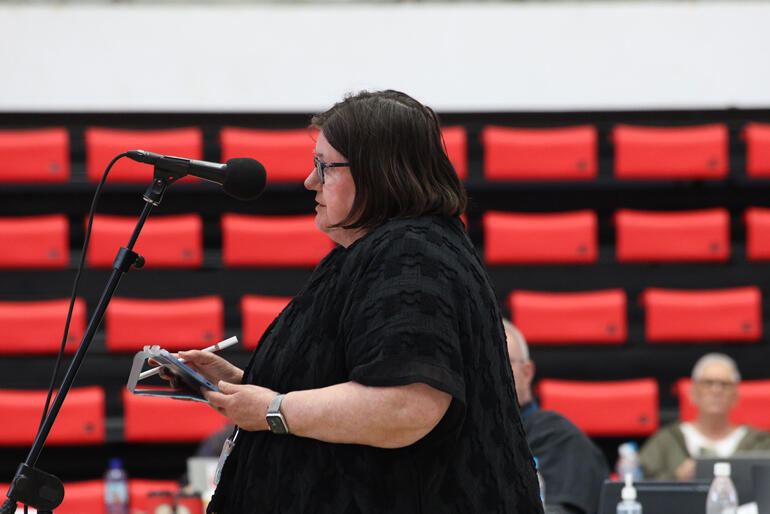
Mover of Motion 8, the Ven Dr Michael Wallace turned to the words of Jerusalem's church leaders to identify the grim role of Christian Zionism on the global stage.
"An alliance of Christian Zionist leaders and organisations with elements in the governments of Israel and the United States are presently imposing their unilateral pre-emptive borders and domination over Palestine. This inevitably leads to unending cycles of violence that undermine the security of all peoples of the Middle East and the rest of the world." said the Jerusalem church leaders.
Palestinian Anglican Archbishop the Most Rev Hosam Naoum joined with fellow church leaders sending out that warning, as they implored Christians everywhere to take the threat of Christian Zionism seriously,
"With urgency we warn that Christian Zionism and its alliances are justifying colonisation, apartheid and empire-building." they said.
Motion 8 affirms the Episcopal Diocese of Jerusalem and the Middle East as a critical partner for this Church's solidarity and support, encouraging the Church to continue contributing to its crucial ministries through Anglican Missions and Christian World Service.
Archdeacon Michael Wallace quoted the Archbishop of Canterbury the Most Rev Dr Sarah Mullally, who spoke out on the crisis for Palestinian Christians following her recent solidarity visit in Israel and Palestine.
“We fear for the long-term future of the indigenous Christian Palestinian presence in the Holy Land that stretches back to the time when our Lord walked this land." she said.
"This existential challenge demands our focused attention and collective responsibility. The time to act is now."
"Across Palestine and Israel, we met families that feel unmoored and traumatised by endless conflict… in the West Bank, unchecked settler violence, forced displacement, systemic discrimination, and expanding checkpoints have left the Palestinian population impoverished, desperate and powerless to enact change." she said.
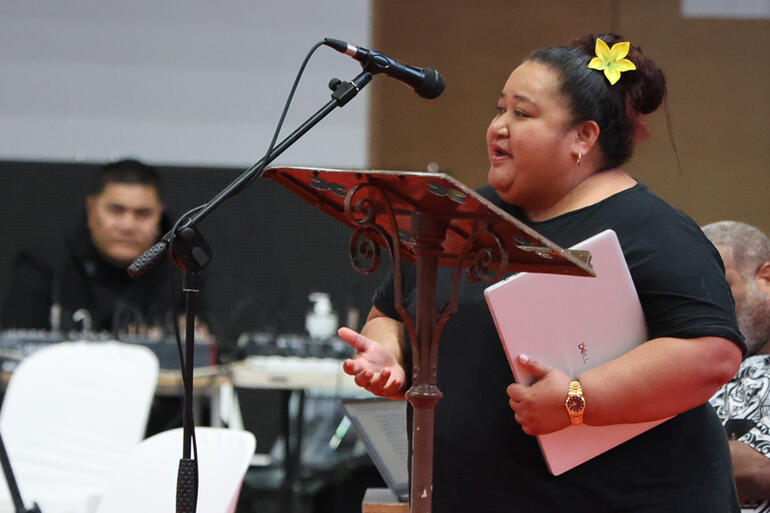
Motion 8 passed by the Tonga Synod recognises too, that constant violence against Palestinian families in the Holy Land also harms Jewish whānau in the Holy Land and fuels violence against Jews around the world.
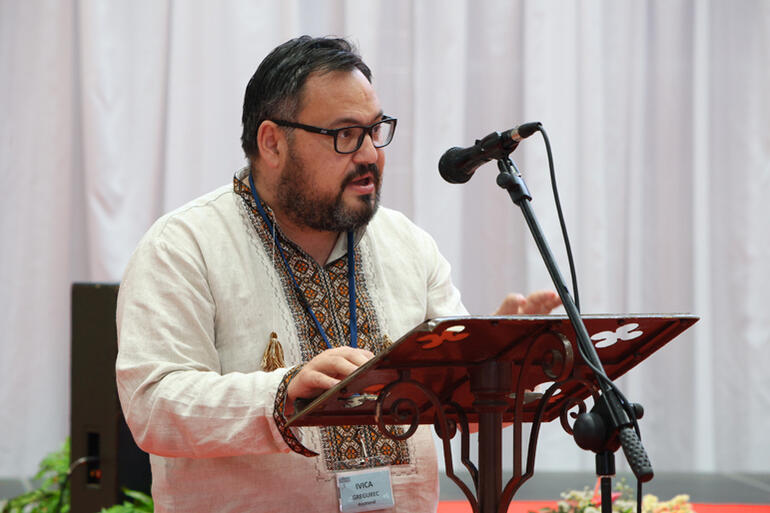
Motion 8 seconder and interreligious dialogue expert the Rev Ivica Gregurec focused his speech on the importance of opposing both the extremism of Israel's Government and that of antisemitism.
He introduced the Jerusalem declaration on antisemitism, (adopted by more than 350 – mostly but not exclusively – Jewish academics and scholars) that sets out fundamental principles of what constitutes bigotry and racism against Jews. The declaration declares the following unacceptable:
– Negative generalisations of Jewish people
– Applying negative stereotypes to the whole State of Israel
– Denying the right of Jews in the State of Israel to exist and flourish, based on equality and equal rights for all citizens, Jewish and non-Jewish alike
– Applying a different standard to the state of Israel than to any other democratic nation
– Holding Jews collectively responsible for Israel’s actions
– Using coded antisemitism linked to Jewish names or organisations
– Denying or diminishing the Holocaust
Ivica pointed out that to the church's shame, key antisemitic attitudes were promoted through Christian texts for centuries, going back to our Anglican Book of Common Prayer (1662), which asked God to have mercy on "all Jews, Turks, Infidels and Hereticks," while for those same years Roman Catholics were praying for "perfidious" Jews.
"The horrors of Holocaust before and during WWII have confronted the conscience of humanity with antisemitism." Rev Ivica told Te Hīnota Whānui.
He went on to encourage Anglicans to stand with Jewish communities calling for peace and justice in Palestine, outlining actions for peace that are not antisemitic, such as:
– Criticising or opposing Zionism as a form of nationalism
– Arguing for a variety of constitutional arrangements for Jews and Palestinians in the area between the Jordan River and the Mediterranean
– Evidence-based criticism of Israel as a state
– Joining in boycott, divestment and sanctions as a non-violent form of political protest
Motion 8, which was passed unanimously with acclamation, stands for peace and justice in the Holy Land and commits the Anglican Church in Aotearoa, New Zealand and Polynesia to specific actions going forward.
It aims to help Anglicans in these islands take responsibility for our Church's power to shift hearts and minds towards peace and justice in the Holy Land, to advocate for diplomatic pressure on and by our Governments, and tasks the three-tikanga Council for Ecumenism to lead education that will help shift our communities' understanding towards peace and away from Christian Zionism and antisemitism.
Motion 8 on the Holy Land follows in full below:
:: :: :: :: :: ::
Motion # 8
Holy Land
Mover: Ven Dr Michael Wallace Seconder: Rev’d Ivica Gregurec
Noting the continuing state military violence and relentless oppression of the people of Gaza, increasing violence by settlers against Palestinians in the West Bank and East Jerusalem, the intensifying pressure on Christian communities in the Holy Land, and the steady rise of Christian Zionism in our countries,
This Te Hīnota Whānui/General Synod:
a. Affirms and commits to continue to support the ministries of Archbishop Hosam Naoum and the Episcopal Province of Jerusalem & the Middle East - in Gaza and throughout the Middle East, and encourages our agencies ABM and CWS to continue work with partners in the Holy Land.
b. Calls on our governments to actively contribute to peace, recovery and reconstruction in Gaza.
c. Affirms the right and freedom of Christian communities to exercise their ministries in the Holy Land.
d. Calls on our governments to do what they can in international forums to uphold the rights of religious minorities in the Holy Land.
e. Rejects antisemitism1 (As defined in the Jerusalem Declaration on Antisemitism) and the violence that flows from it.
f. Rejects Christian Zionism2 (As defined by the Jerusalem Heads of Churches in 2006) and the violence that flows from it.
g. Requests the Council for Ecumenism to educate Anglicans in Aotearoa New Zealand and Polynesia about antisemitism and Christian Zionism.
h. Calls on our governments to do what they can in international forums to halt settler violence, and halt illegal settlements in Palestinian areas.
i. Asks the Archbishops to communicate the contents of this motion to the governments of Tonga, Samoa, American Samoa, Fiji and Aotearoa New Zealand.
Notes:
1 As defined in the Jerusalem Declaration on Antisemitism (JDA); the JDA is a tool to identify, confront and raise awareness about antisemitism. It was developed by a group of scholars in the fields of Holocaust history, Jewish studies, and Middle East studies. It has around 370 signatories. The JDA can be found here: Jerusalem Declaration
2 Christian Zionism as defined by the Jerusalem Heads of Churches in 2006: Jerusalem Declaration on Christian Zionism






Comments
Log in or create a user account to comment.