

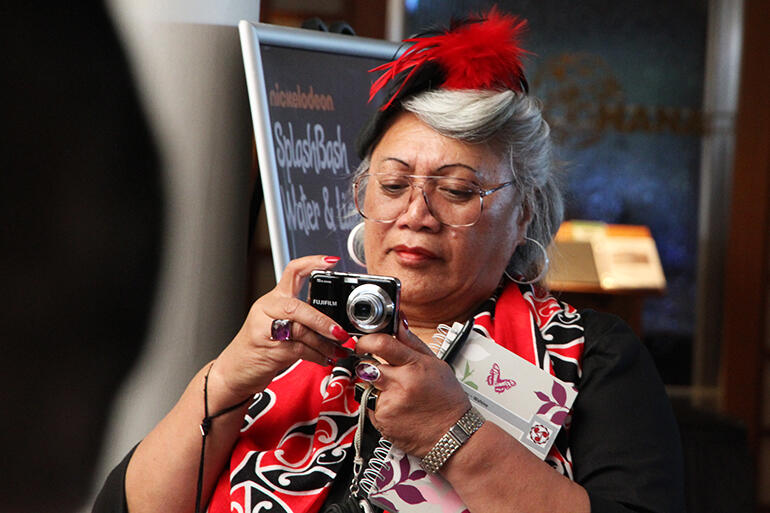
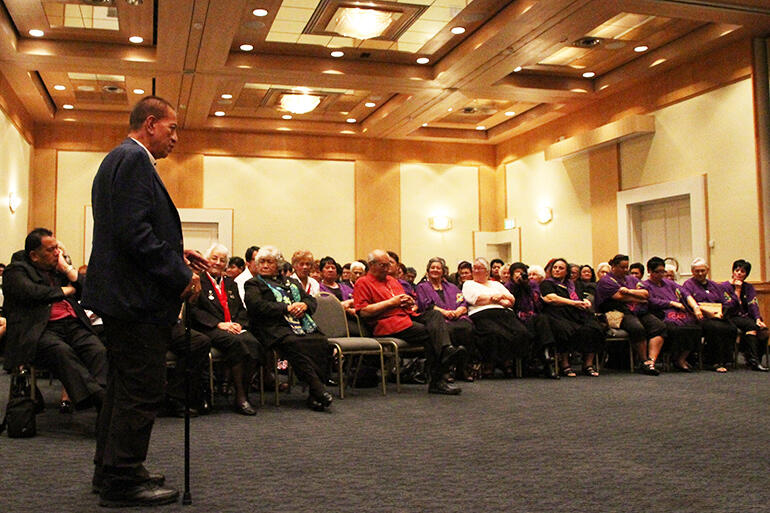
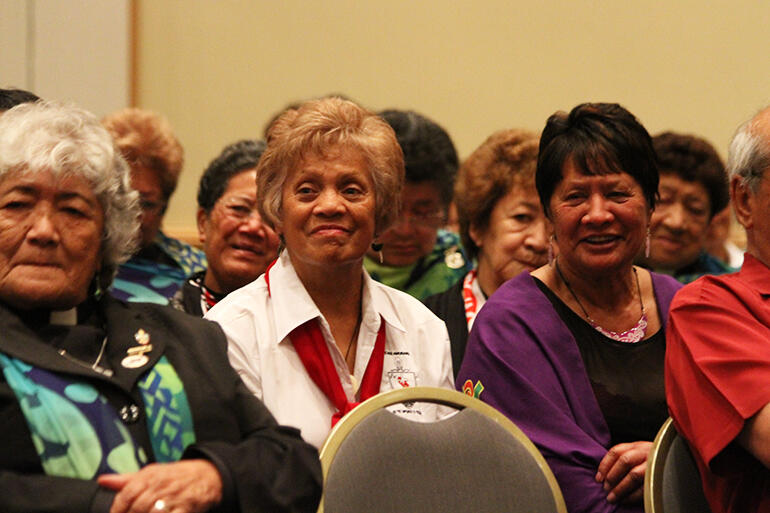
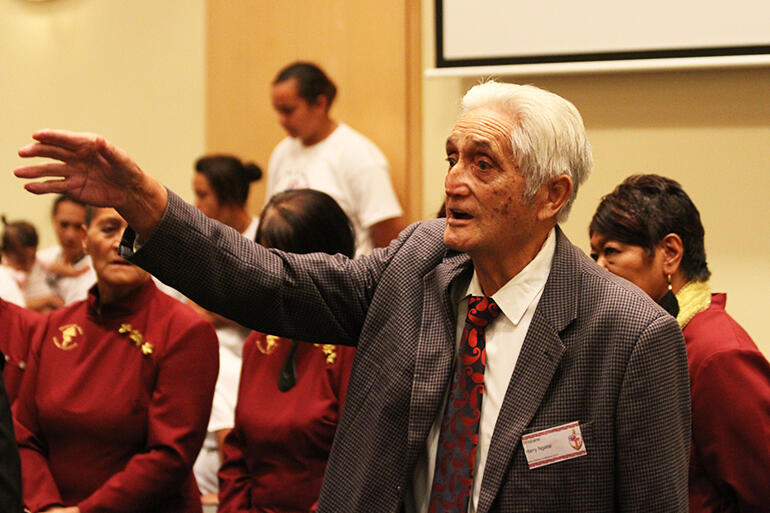
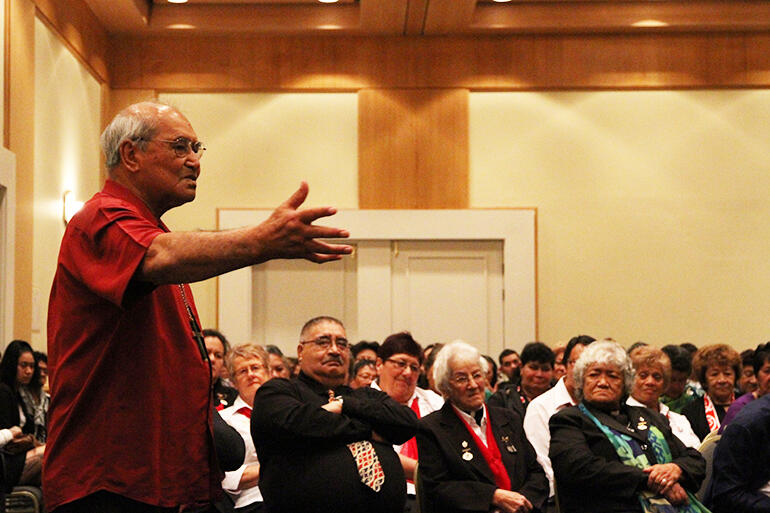
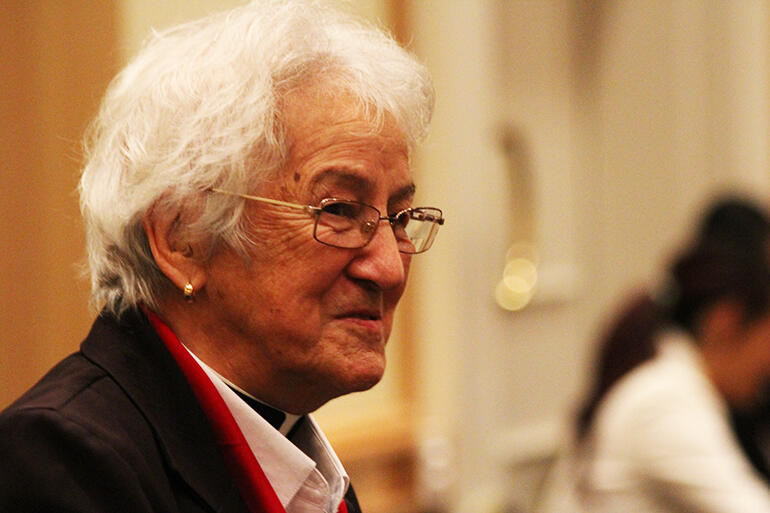
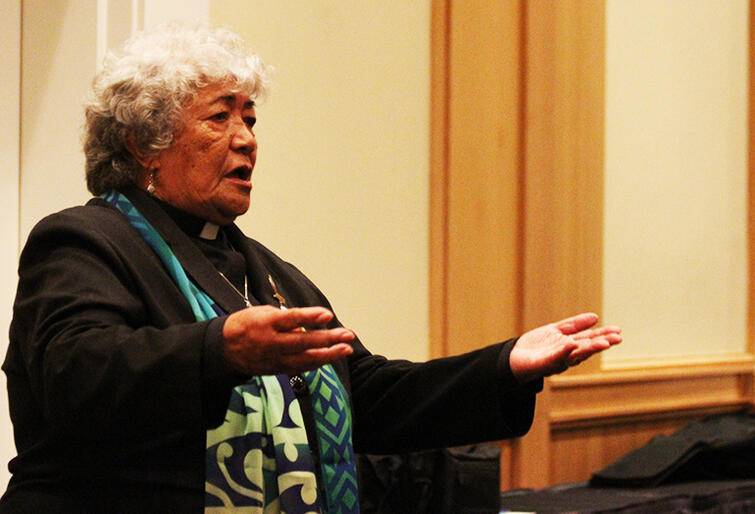
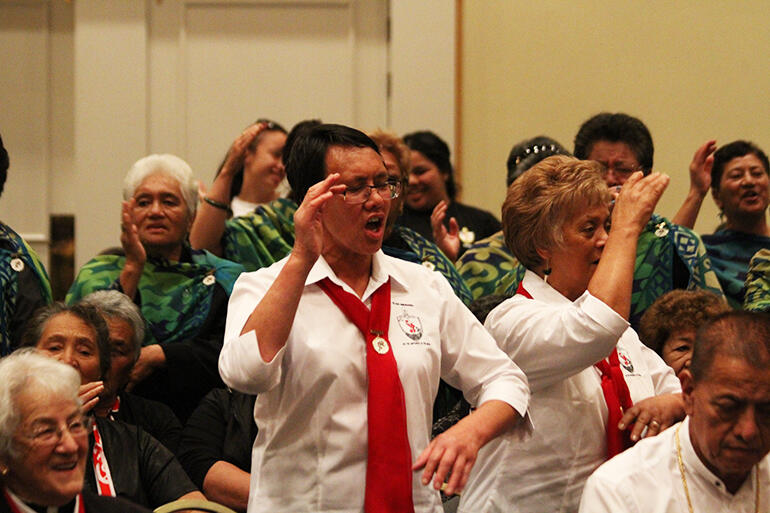
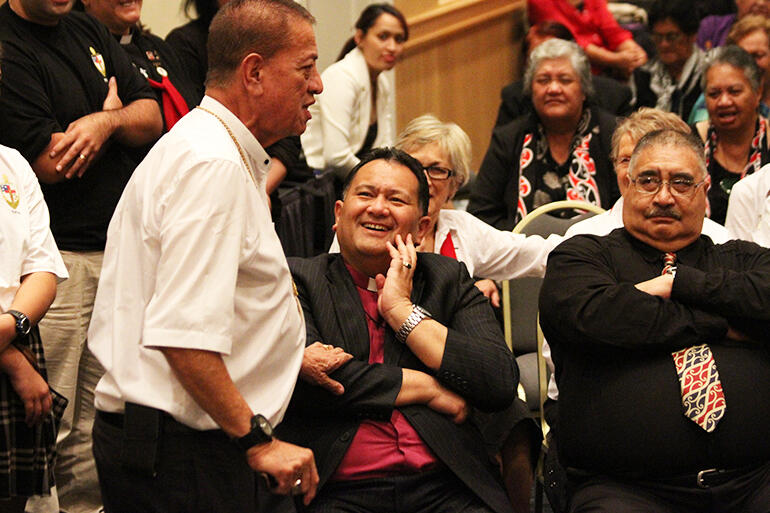
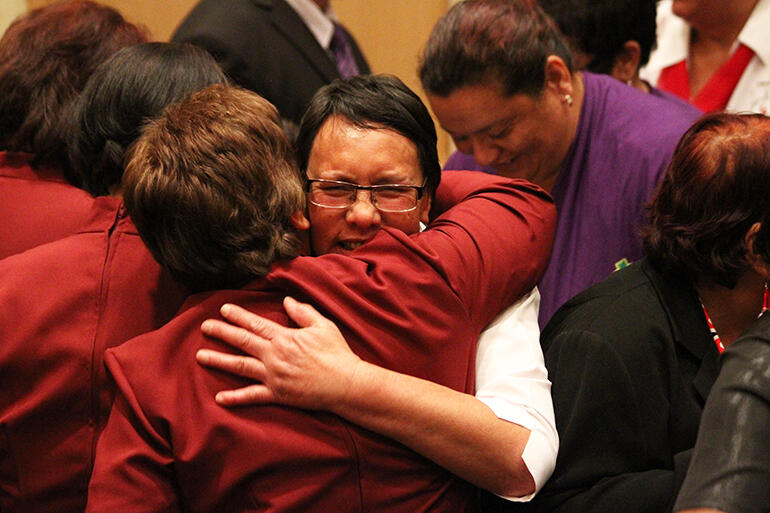
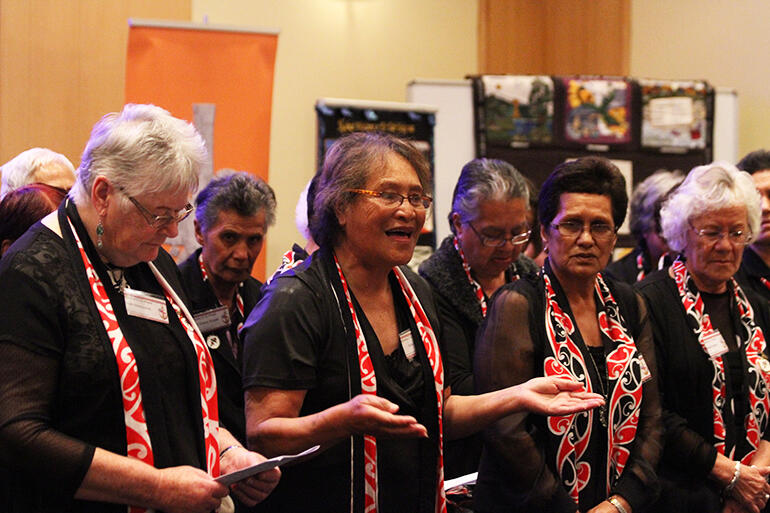
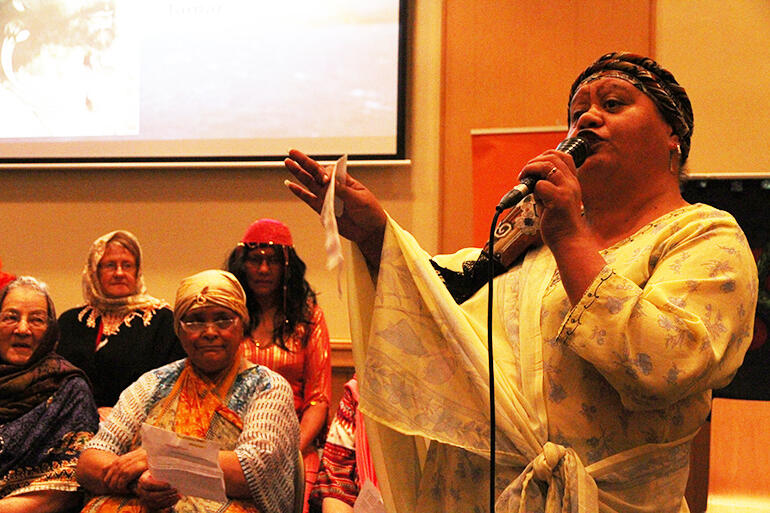
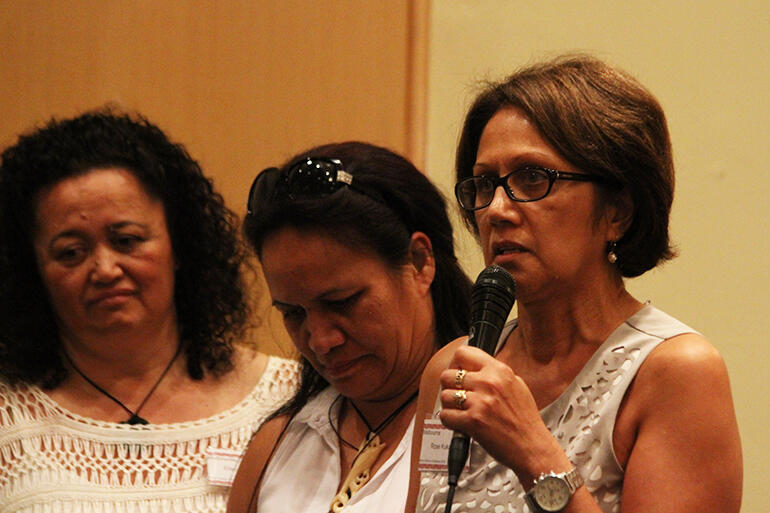
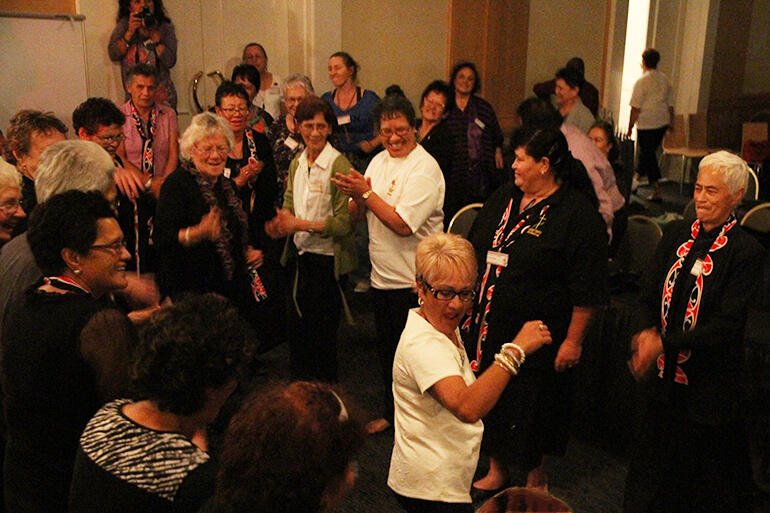
Almost half of the crew who turned up at Te Rau Oriwa last Sunday were women who’d just wrapped up the first international conference of Kahui Wahine, the Pihopatanga women’s network.
They’d met on the Friday and Saturday at a Gold Coast resort, and they’d been hosted by Kahui Wahine o Piripane – the Brisbane Maori Anglican women’s group.
That Gold Coast gathering was, as we’ve suggested, the first time in the 25-year history of Kahui Wahine that it has met outside Aotearoa. And while it was fun, it was no junket.
Each of those 180 or so women – most of whom had flown over from Aotearoa, some of whom had flown in from Perth, Melbourne and Poi Hakena, or Sydney – had paid their own to get to that Gold Coast resort, and to stay there.
That’s how important the hui has become to them.
There’s not much doubting the significance of Kahui Wahine, either – Bishop Kito Pikaahu has described this network as ‘the backbone’ of Te Pihopatanga.
And he, Archbishop Brown Turei and Bishop John Gray were on hand at the Gold Coast hui to show their support for the women.
'Leave your country...'
The Gold Coast hui took as its theme: “The Great Migration”, and the programme pointed out that Maori have always been a migratory people, and that migration themes are woven into the very story of redemption: The Lord said to Abraham: ‘Leave your country, your relatives, your father’s home and go to a land that I am going to show you. I will give you many descendants, and they will become a great nation. I will bless you and make your name famous, so that you will be a blessing.’ Genesis 12: 1,2.
Each of the five hui amorangi within Te Pihopatanga have their own Kahui Wahine roopu, and at the ‘GC’ (Gold Coast) hui each roopu focussed on some aspect of that theme, either by way of drama or skit.
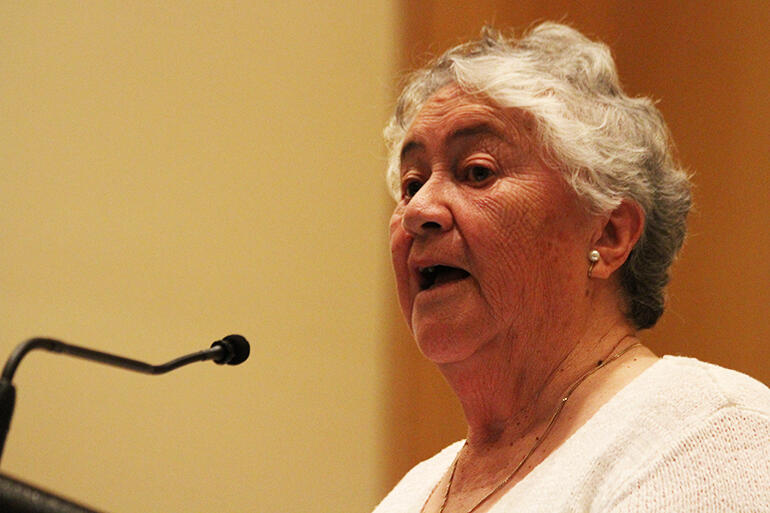
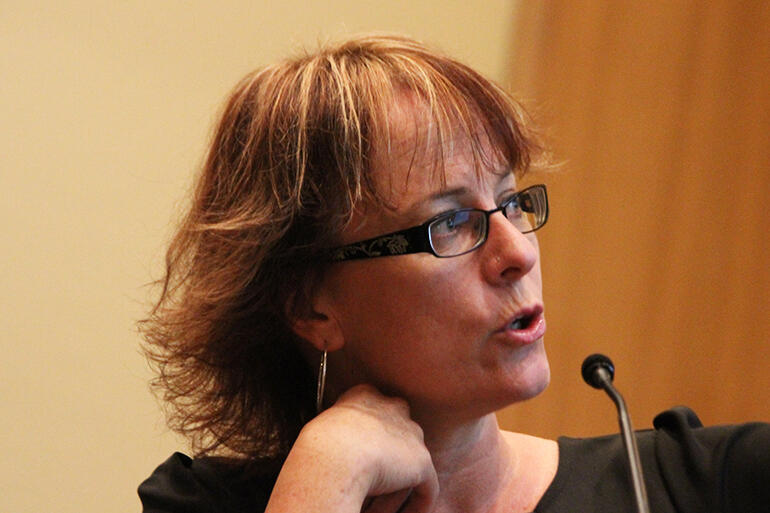
There were a number of guest speakers, too, who also honed in on some aspect of that migratory theme – or on the sometimes harsh realities that Maori in Queensland must contend with.
In many ways, though, the value of these Kahui Wahine hui lies not so much on the surface – yes, the presentations and the lectures are important – but in the whakawhanaungatanga, the making and strengthening of relationships that makes Kahui Wahine such a potent force within Te Pihopatanga.
That’s how the Rev Jenny Quince, who is a priest with Te Mihana Maori of Tamaki Makarau (the Auckland Maori Mission) and veteran of the Kahui Wahine scene, sees things.
Jenny says the Kahui Wahine women not only uphold one another in prayer and practical support – no matter where they travel around the motu, they know they have places to stay, for example – they have a flax-roots understanding of how things are with far-flung whanau living away from their rohe.
Infiltrating crises...
So in times of need or trouble they can not only mobilise prayer and support, they can ‘infiltrate’ the crisis and stay and help out in a way that tane, with their more scheduled and direct approach, don’t always manage to do.
And the quality of the whanaungatanga at the Kahui Wahine is such, says Jenny, that women keep coming back for more – they keep coming even when they’re sick or in pain themselves, and they keep coming even when they’re in the midst of whanau tragedies and heartache at home.
The impact of that kind of whanaungatanga was most apparent in the reactions of the delegates from the various parts of Australia – from Brisbane, Sydney, Melbourne and Perth.
Some of these women are second-generation Australian citizens, and the mothers of third-generation Aussies.
So for them the migration is a reverse one. A coming-full-circle one – they came to Gold Coast from Perth for example – and judging by the stories these Australian Maori women shared, and the emotion they expressed, their hikoi to the Kahui Wahine hui on the Gold Coast was a poignant, even life-changing, connection to kin that they’d not known before.









Comments
Log in or create a user account to comment.