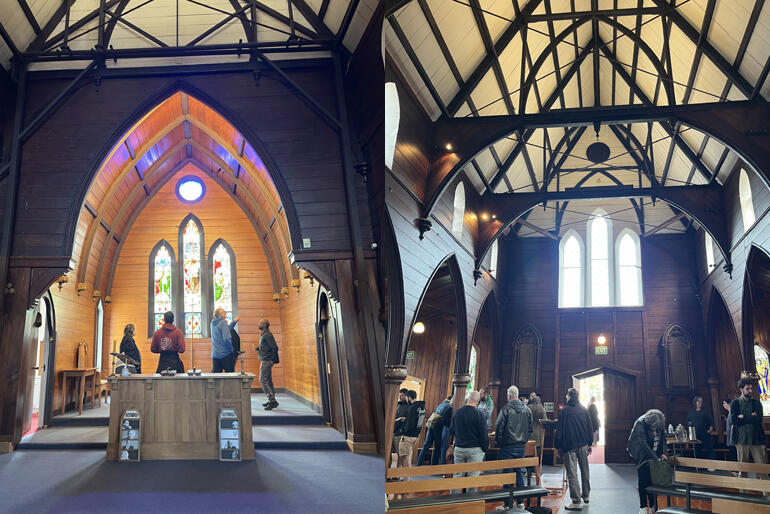
Forty clergy and lay leaders from more than 30 Tikanga Pākehā parishes around the motu travelled to Whanganui this 28-29 October, to hear the story of a church community that went from closing churches, to training and sending leaders for the renewal of the diocese.
The event was the Tikanga Pākehā Mission and Ministry Conference (TPMC), a mission-resourcing body for the Aotearoa New Zealand Dioceses, whose job is to inspire, equip and sustain ministry leaders, ordained and lay.
Archbishop Justin Duckworth invited TPMC to Whanganui to hear and see how its Anglican churches had moved from decline and amalgamation to growth.
Former Vicar of Christ Church and Whanganui Archdeacon Stuart Goodin opened the first day by tracing recent Anglican history, including the decisions that led the parish to close churches and become a single parish.
Today's priests in charge Billy and Caleb Rowe then described how a deliberate strategy of forming disciples to lead and build teams has made Christ Church Whanganui a sending church for the diocese.
Christchurch ordinand from the Parish of Kaiapoi Andrew Clark was struck by the idea of a team upheld by intentional connections between leaders.
"I found it inspiring to see how central discipleship was to the way these leadership teams were formed and functioned, and the whole area of discipleship, and how it can be effectively embedded in the life of a church." he said.
Kara Dodds from Wakatipu Parish in Queenstown, who is on the Dunedin Diocesan children and families' team, was fascinated to hear the mechanics of how church leaders negotiated such major change.
"There was the hard work of closing some of the parishes and laying them fallow before they replanted, :" she said ... "but a lot of [it]...was working on culture and discipleship and working through conflict and building trust."
Although Whanganui never set out to build a model for change, Kara could see their one-on-one discipleship mentoring and their commitment to hold genuine, open conversations across churches was essential to creating a space where something new could come to light.
"Some of that was about developing a shared language about teams and identifying dysfunction, and having crucial conversations." Kara said.
"There was also spiritual formation, and they talked a lot about the importance of having a shared vision."
Auckland Diocesan Ministry Educator Rev Sarah Moss appreciated the strength of small group discussions at TPMC in Whanganui, as Anglicans from across the motu identified the principles leading Whanganui's successes, and took time to reflect on what that might look like in their own contexts.
"Things I’ve been reflecting on are community, intentionality, and invitation." Sarah said.
She believes that rejuvenation happens when churches place community at the centre of their planning.
"Intentionality and invitation become inseparable for me, because they speak of the generous hospitality required to draw folk together in authentic community."
At St Luke's Anglican Church in Castlecliff, where two diocesan housing units now stand, TPMC once again heard a story of rejuvenation.
St Peter’s Gonville Co-vicars Rev Luca Tovey Duckworth and Rev Sam Tovey Duckworth spoke there as second generation leaders of their church replanted in an historic building, and in Whanganui East, TPMC heard from current Christ Church members committed to starting a new congregation there soon.
At each stop, participants broke into small groups mixed across dioceses to reflect on where they had seen God at work in their own patch of Aotearoa, mistakes they would rather others didn’t repeat, and what their parishes had in common with Whanganui.
The Diocese of Wellington's rejuvenating churches talked about the "cost of change", sharing how during the hardest decisions, senior leaders in the parish were willing to take the heat themselves, which protected newer leaders and gave them room to build something new.
Another key factor was the steady work of growing leaders – looking for people with potential and investing time in their formation, so the parish’s capacity grew each time someone stepped up.
Part of sharing the load was financial too. The greater parish agreed to cover a new congregation’s costs for a season, until it was established well enough to meet its own expenses and then begin to contribute to the overall parish budget. Because that pathway was agreed from the start, a young congregations can put down roots before it's expected to stand on its own.
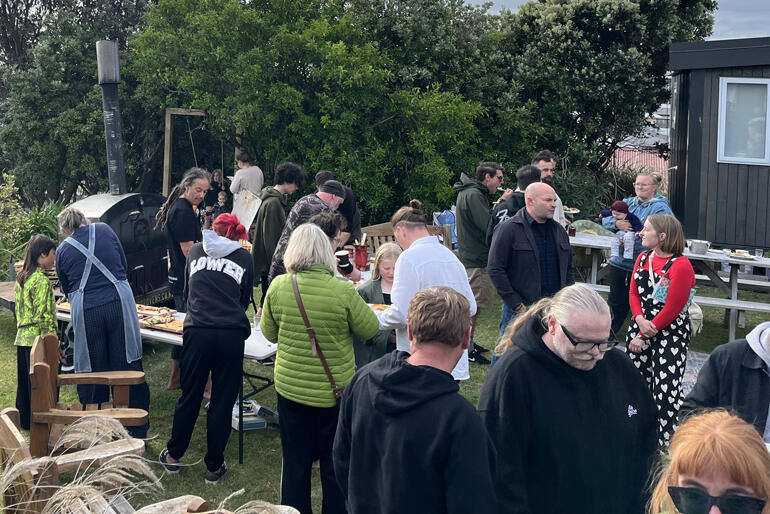
National Children & Families Ministry Enabler for Tikanga Pākehā Diana Langdon reported one highlight was going to Archbishop Justin Duckworth's home for a meal. With the pizza oven fired up she described the manaakitanga as warm – demonstrating the charism of personal hospitality at the heart of the Urban Vision movement, an ethos and practice that undergirds much of the ministry development in Whanganui.
This October's meeting followed on from recent TPMC events delving into creativity in Anglican worship, ministry with the “third third” of life, and building flourishing smaller parishes, each drawing a different group of leaders together to learn from one another.
To find out more about Tikanga Pākehā Mission and Ministry Conference go to the TPMC website.
This article draws on an article in Anglican Movement Online.


Comments
Log in or create a user account to comment.