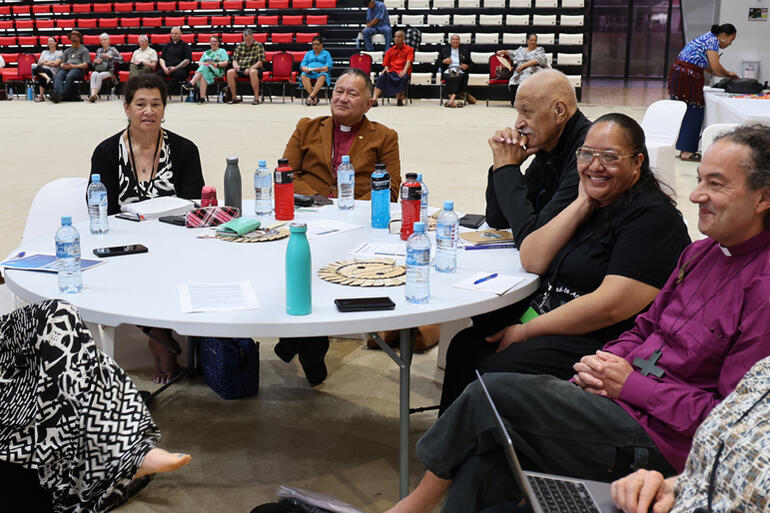
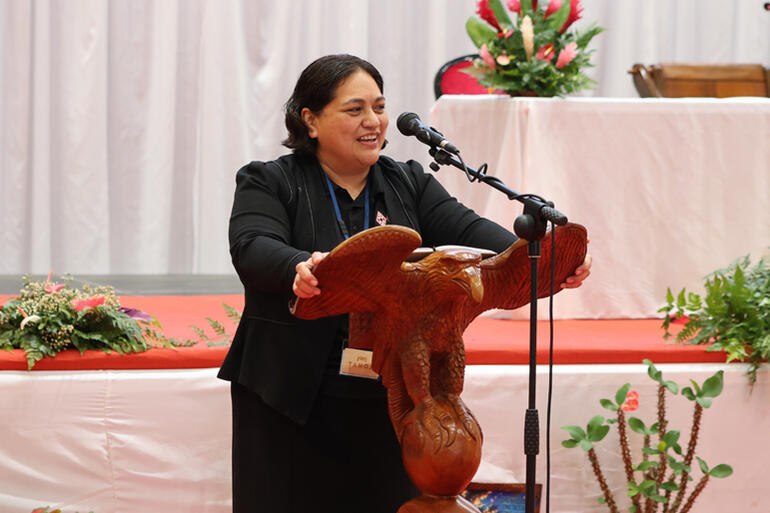
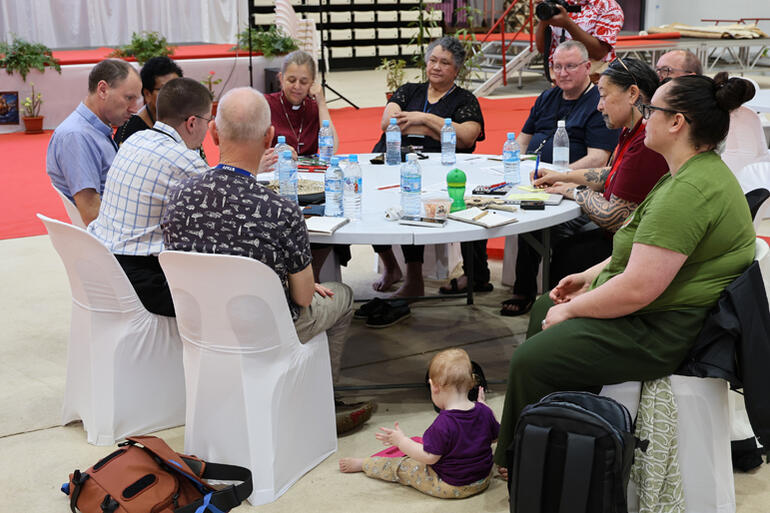
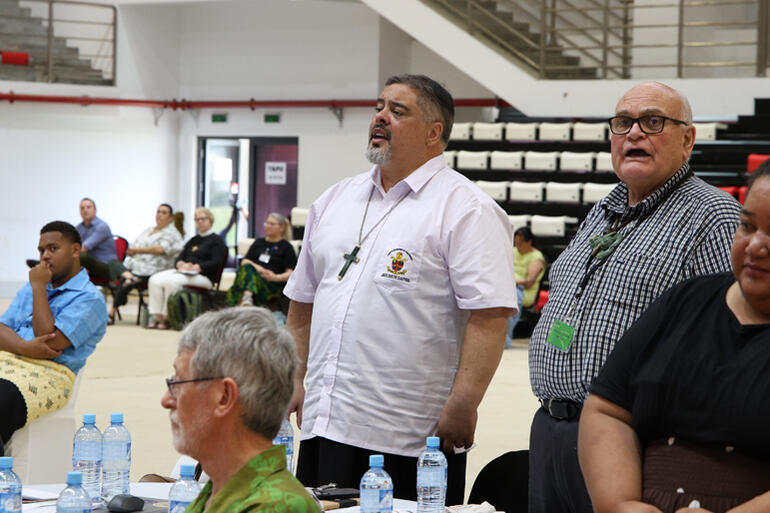
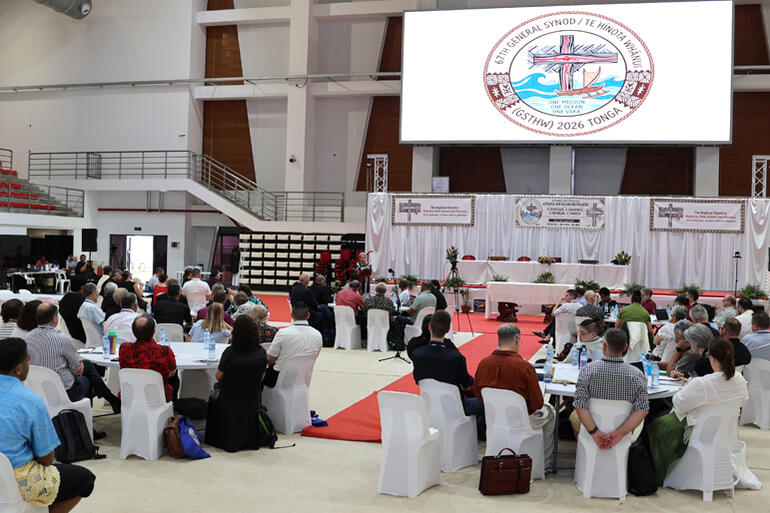
Opening this General Synod's talanoa on equity, Canon Isaac Beach invited Te Hīnota to gather in three-tikanga groups as they entered into the traditional Pacific mode of storytelling and viewpoint-sharing known as talanoa.
The talanoa session aimed to deepen whanaungatanga (living together as family) and to share stories of church life as it has been under the inequities of our inherited structures and systems, as well as dream of how it could be if all could flourish together.
"In order to move into flourishing, and unpack what future flourishing will look like, we have to do some work on understanding our history, our past as a Church." said Canon Beach.
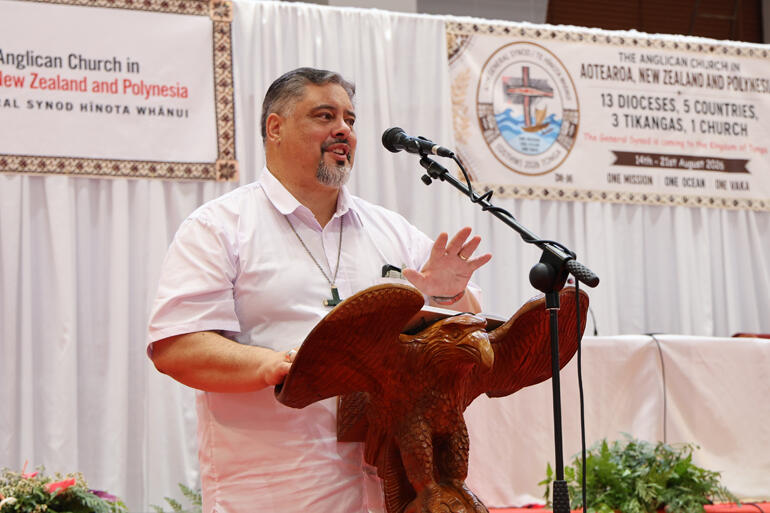
Archbishop Justin Duckworth explained the equity conversations that had led to the day's talanoa, concluding with a recent decision by General Synod Standing Committee that asked Tikanga Māori to oversee St John's education funds distribution for the next two years.
Archbishop Don went into detail on the Anglican Church's 1992 constitution (Te Pouhere) revealing the genius in its wording, which entitles Māori, Pākehā and Pasifika the right to self-organise, govern and serve their people according to their respective tikanga (culturally appropriate way of doing things).
Dr Jenny Te Paa Daniel presented on the history of educational funding, pointing out that despite Te Pouhere's changes, in the 34 years since it was installed, the large majority of those resources have remained in the structures and systems serving Tikanga Pākehā.
Archbishop Justin also acknowledged before Synod that the contributions and mission needs of Tikanga Pasifika must be part of every conversation on the future flourishing of this Church.
Archbishop Don Tamihere turned to the words of Te Pouhere, honouring the imprint of its authors, especially the late Professor Whatarangi Winiata.
He also laid out how Te Pouhere requires the Anglican Church in Aotearoa to relate to one another in terms of covenant.
"A covenant cannot be dropped or put aside when it is broken. Covenants persist even when they are broken, because they are a promise to stay with one another till the end." he said.
He went on to demonstrate how Te Pouhere radically reordered relationships across the Church.
"What Te Pouhere has done has taken these three groups and set us as equals – coequally, perpetually."
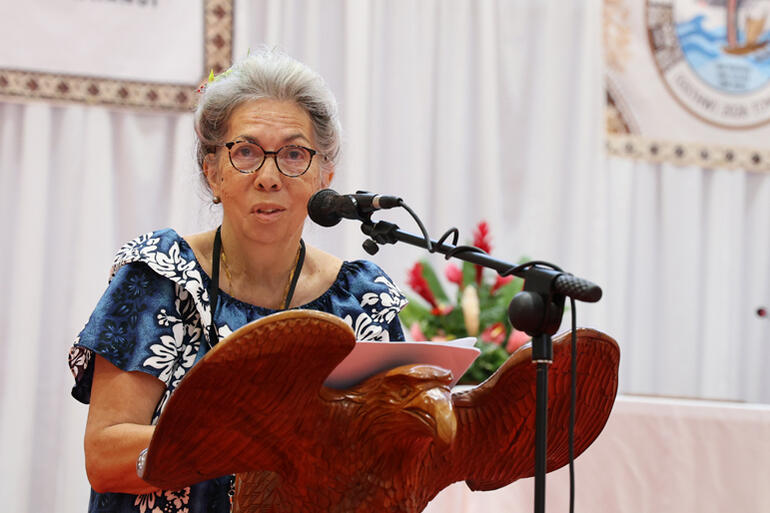
Māori theologian and expert educator Dr Jenny Te Paa Daniel gave her first person historic account of Mihinare education changed and developed under Te Pouhere from the 1980s until today.
"Mihinare Māori stand before you today to articulate the plain truth of our institutionally constituted marginalisation." she said.
"But this is not a narrative of our victimisation. At the same time we recognise the vibrant, creative, radically successful missionary work of Mihinare Māori."
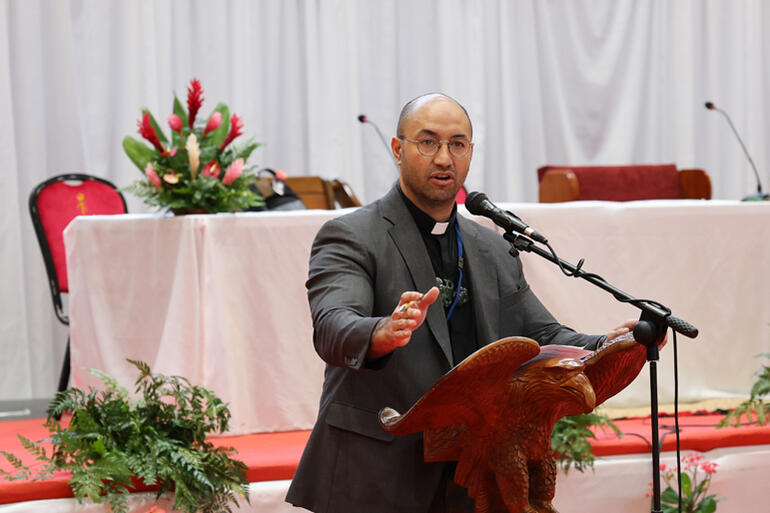
Bishop of Waiapu Andrew Hedge outlined what mutual flourishing looks like today in recent examples between the Diocese of Waiapu and Te Pihopatanga o Aotearoa.
"We are still working, still repenting, still beginning to know what God's justice and mercy asks of us." he told Synod.
"But we have seen what it means for it to move from symbolic gestures to practical flourishing."
He explained how Anglican Care Waiapu has adopted Te Pīhopatanga o Aotearoa's mission of Te Oranga Ake o te Ao,(human flourishing, flourishing of all) and how in 2021 the Waiapu Synod moved to redirect the purposes of the Waiapu Social Services Trust Board to reflect Te Oranga Ake in its work.
"In the last three years Waiapu has received opportunities to deepen understanding of mātauranga Mihinare, shared approaches to theological education, and our relationship has deepened in tangible ways as a result." he said.
"We have had to learn how unearned advantage and disadvantage has been created, and to dismantle the systems that have created it."
Archbishop Don asked General Synod Te Hīnota Whānui to consider the power of Jesus' call for jubilee from the scroll of Isaiah.
"In Luke 4 when Jesus said 'The Spirit of the Lord is upon me,' remember he was speaking to an oppressed people, deeply repressed under a colonial force.
He announces good news to those that are poor, those that are restrained and held in prison..and... these are not high level principles to lift out."
"It is a difficult work. But it is not an abstraction. It is an action: the action is justice, the action is equity." he said.


Comments
Log in or create a user account to comment.