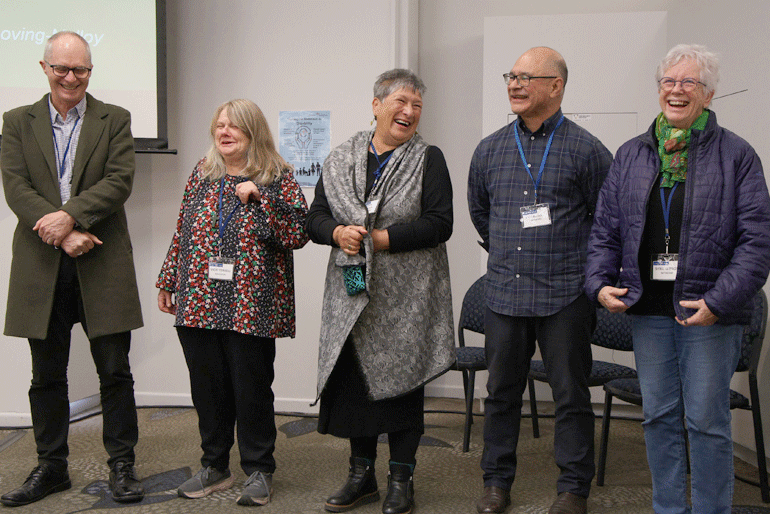
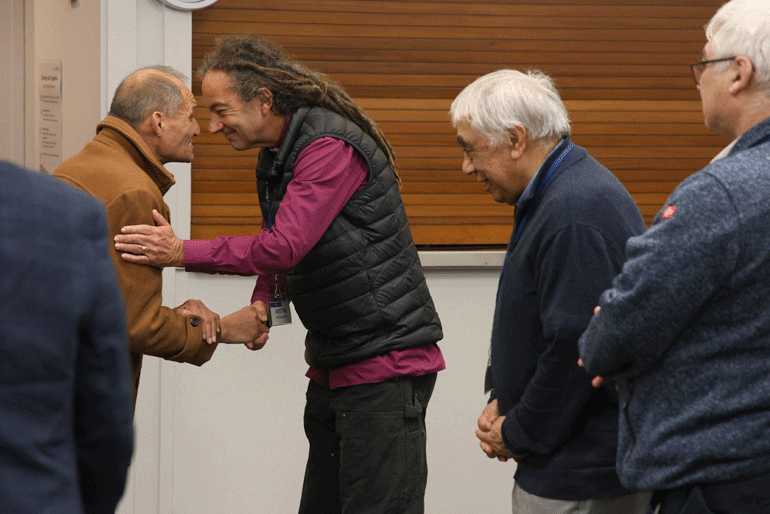
Around 35 disability experts and Anglicans engaged in disability ministry gathered from across the Anglican Church in Aotearoa, New Zealand and Polynesia yesterday to investigate and build on best practice in building inclusive church communities.
Inclusive in this forum means church communities that actively recognise and empower a diverse range of people, including those with visible and hidden impairments.
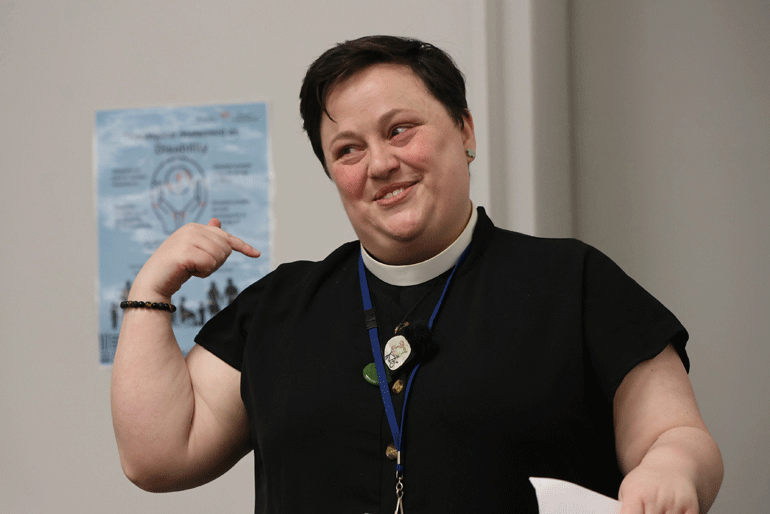
Following a pōhiri grounding the event in Hataitai, the Reverend Leo te Kira introduced the first four seminars of the 2026 Anglican Disability Ministry Summit on behalf of the Anglican Disability Ministry Network who organised the Summit.
Recognising hidden disabilities
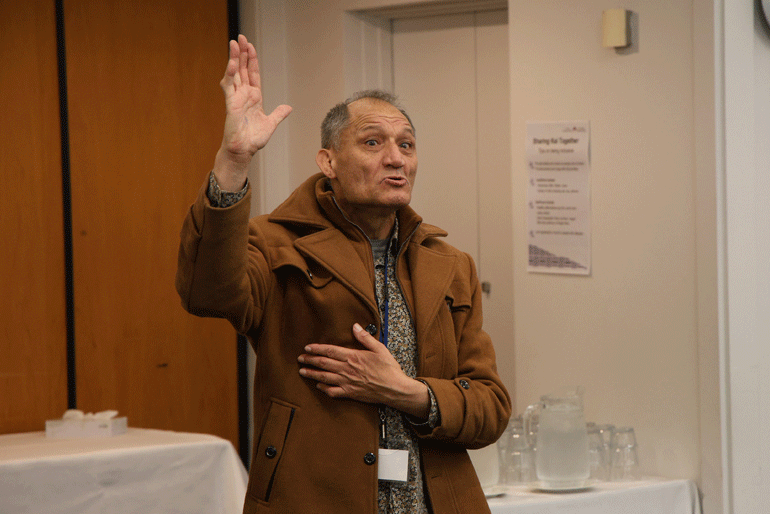
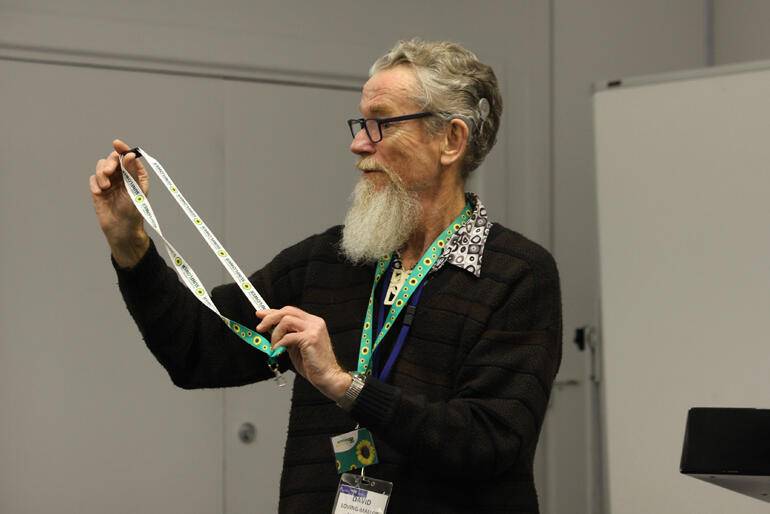
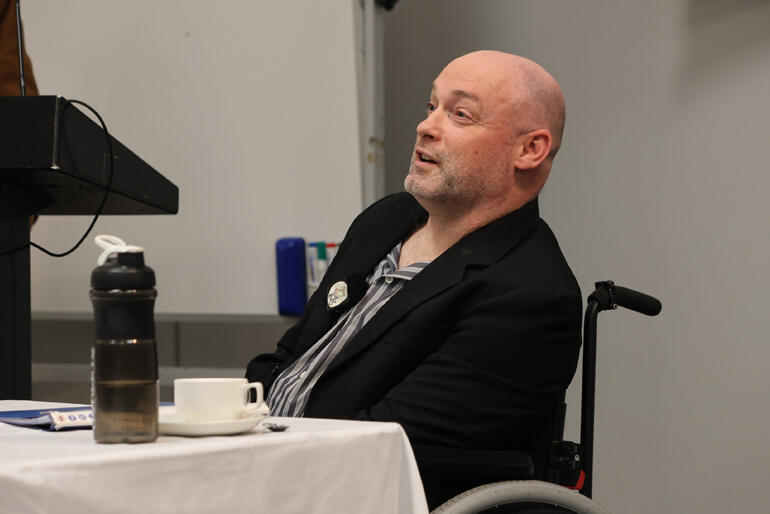
Former Marist Father David Loving-Molloy, who hears through an implant, began with his reflection on his long-term ministry with the Deaf and Deaf-Blind communities and shared his own recent story of losing sight in one eye after his detached retina escaped his notice.
David set out more than twenty years ago leading "culturally disabled ministry", when he'd realised there were no masses or other church services using Deaf sign language. But soon he moved to bring both support and visibility to the Deaf community through real-time sign language translation in mainstream masses.
He challenged Anglicans to adopt the "Hidden Disabilities Sunflower Scheme" a programme run by numerous overseas orgainsations, including the Anglican Diocese of Melbourne, and now picked up by All Saints' Anglican Church and the Catholic Cathedral of the Holy Spirit in Palmerston North.
The scheme supports people who want to disclose their hidden disabilities by wearing a green lanyard with sunflowers, which are then recognised by others trained to support them, who wear white lanyards and commit to asking, "Can I help you?".
Archbishop Justin Duckworth was taken by the scheme's artfully simple plan and wants to see Anglican communities propagate it.
"It think it's a no-brainer that our Church should be doing it. I will take that away in my kete of things to action." he said.
Humans versus labels
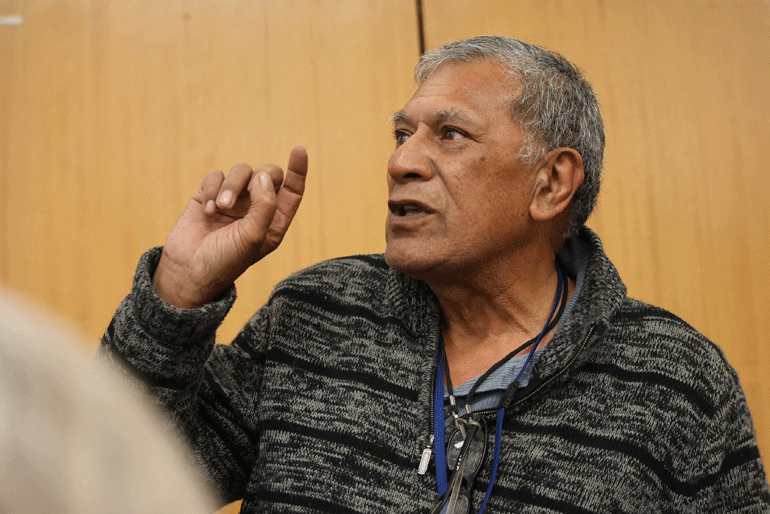
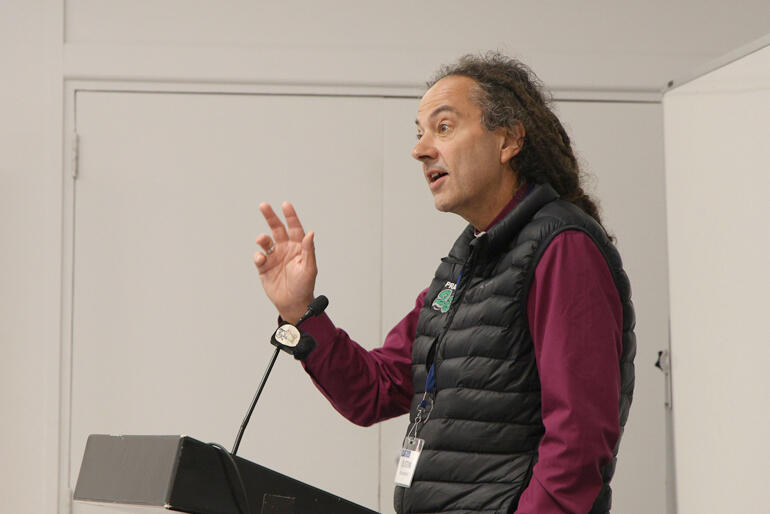
Gray Ruffell talked about his background growing up in a whānau that led him to analyse social systems and look for solutions, and emphasised the importance of educating children and young people and the wider community on what it means to live with diverse experiences. While he had no time for injustice, patronising treatment or other harms, he challenged the Summit to step away from too much concern for their own standing or public perception and to instead lean into educational mode.
"The call is on us is to think about the role of grace in community life, and to be genuinely available. Don't get so hooked on pride and language and dignity that you can't interact with people."
He zeroed in on Galatians 3: 28 (In Christ there is neither Jew nor Greek...) and Peter's Vision in Acts 10: 9-15 (Christ overturns what is clean and unclean).
"I don't need the label disabled. All categories die, all categories pass. In the end we are simply humans being human."
The Reverend Lanieta Tuiwaiwai, Priest in charge of St Mark's Parish in Suva said the first day of the Summit had opened her mind to perceive disability in new ways.
"In my context in Fiji we don't go into detail about disability like we did today. It was very emotional to hear David's story and to hear Gray's words, it really touched me – he was preaching."
"What I stood out for me was – I am human first, before I am disabled."
"That really affected me. We have to always look at the human being – not the disability."
Carolyn Tregea from St Columbus Wanaka was also struck by Gray's testimony.
"He was very prophetic and made a lot of sense to the people here. It was his raw honesty that hit me, there was a realism about him and he knew who he was as a person first."
Living with neurodivergence
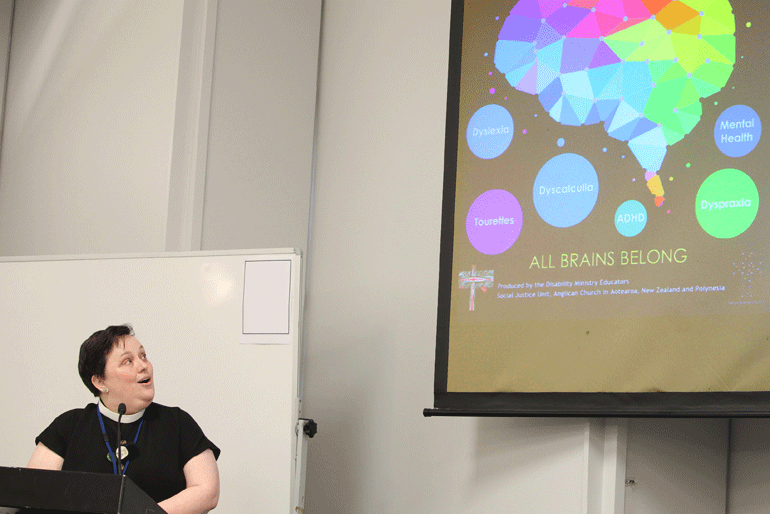
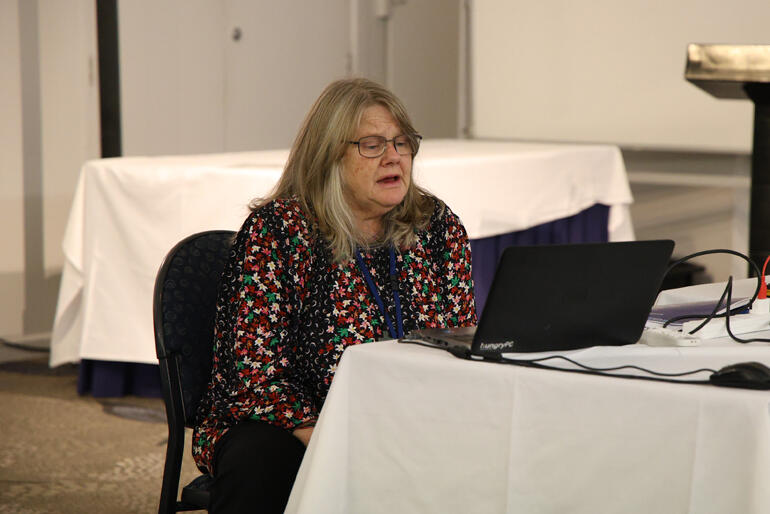
Priest at Hamner Springs the Rev Hilary Willett spoke on living with neurodivergence and its impact on people with brains shaped by ADHD, Autism, Dyscalcula, Tourettes, and diverse mental health and neurological factors.
After her own adult ADHDer diagnosis, she looked back to her month of detentions for talking too much as an 11 year old, and saw many other experiences come to make sense with the logic of her differently-wired brain.
Today as well as using practical techniques like prayer beads, embodied modes of prayer and reflection and sensory downtime, she finds the right medication supports her to live avoiding drawbacks she once coped with as her norm.
She cautioned the forum to avoid amateur diagnoses, reminding that misdiagnoses of neurodivergent children has led to many false accusations of laziness, stupidity or "bad attitude". One data set showed ADHDer children will hear 20,000 more negative comments about them by the age of ten than their neurotypical peers.
Rev Hilary shared how blaming and shaming young people with myths like the debunked theory of autistic "no empathy," has at times led to serious failures of care for autistic young people, including neglect, physical and mental harm, and even death.
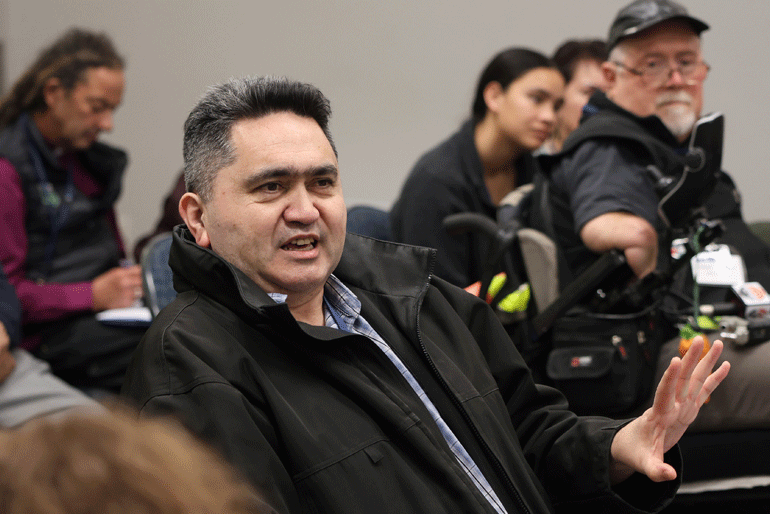
Wayne Paaka identified strongly with Hilary's content, saying that for him the toxic combination of racism and ignorance of neurodivergence caused teachers to overlook him, hold him back from excelling or actively misdiagnose him as difficult or incompetent when the opposite was the case.
As a young adult and still undiagnosed, his mother caught on to the gap in his care and paid for a speed reading course, which meant in a matter of months he covered and surpassed the learning he'd missed at high school.
"I was reading three books a day and I was amazed at how little most people knew – about anything."
It wasn't until Wayne joined the Rev Trish Malcolm as Co-CEO of "Kore Hiakai Zero Hunger Collective" that she suggested he might be neurodivergent and the doctors confirmed she was right.
"It was a bit of a revelation, to find things I saw in myself and in my friends lining up.
It made sense."
A vision of inclusion
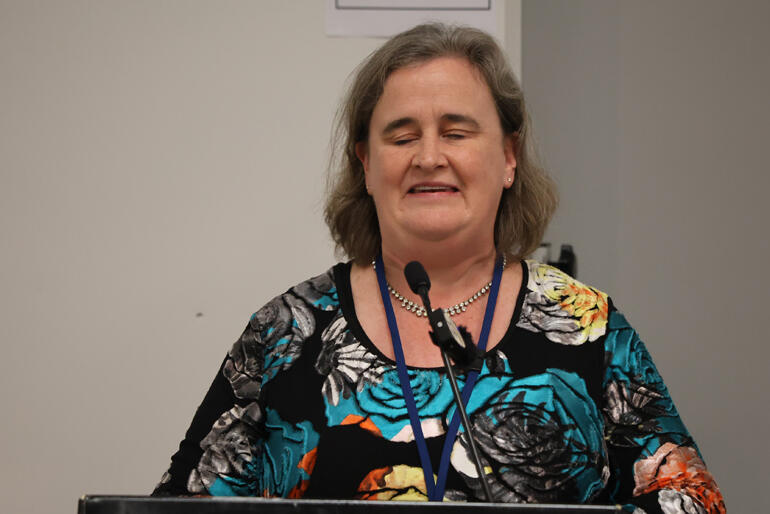
The final speaker on the first day was Master's music student at the University of Auckland and former Blind Foundation Assistive Technology trainer, Karen Plimmer, who attends Cityside Church in Auckland.
She advocated for inclusive churches that actively make space for people with impairments, telling how her church embraces her and welcomes her ministry amongst them.
She spoke too of the frustration she feels when biblical texts like the healing of the blind man arise.
"I asked myself, why God would put that story in there? And why did we not hear what happened when the man could see? How long did it take him to learn to see? How did he understand things like colour?"
Karen recited an imagined dialogue with Jesus, where she talked to him while he was blindfolded and mocked on the way to the cross.
"I asked him could he smell the expensive fabrics and furniture in the chief priest's house? I told him I have not suffered what he did, but I have been mocked for not knowing whose voice I can hear."
"Then I looked at Jesus' last seven words on the cross and wondered how difficult they were to say. I wondered how it would feel for a friend with a speech impairment to reflect on how he spoke them. And I wondered how it was for him later to cook and serve fish for breakfast with wounded hands."
Karen also offered a taste of her Master's degree project, playing snippets of the music she'd composed leading a community to create sounds and using assistive technology.
Her final challenge was for Christian communities to step up and follow the example of her church that enables her and her 8 year-old daughter to be a full part of its community life in every aspect, including leading in children's ministry, hospitality, music and other parish roles.
The 2026 Anglican Disability Ministry Summit continues until Sunday afternoon.


Comments
Log in or create a user account to comment.