



When Anglican parishioners from Navua to Naulu, from Nausori to Levuka piled into Suva’s Holy Trinity Cathedral last Sunday they weren’t, as is sometimes the case, heading in there for ordinations.
No. They’d come to witness their priests declare before God that they will take the lead in turning back the violence that afflicts so many homes, so many women and children in the Pacific.
They saw their priests saying: We’ll be accountable on that. We’ll start with us.
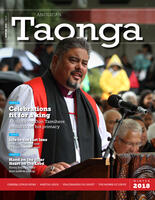
And their reaction to that declaration, says Archbishop Winston Halapua, went deeper than he’d been expecting.
“I had my eyes opened,” he says. “I felt a sense of hope rising. I saw something happening, deep down, especially among the women and children.
“The fact is that not a day goes by that our newspapers and radio news bulletins don’t carry items about the violence that we live with.
“So the people were rejoicing to see their leaders stand against that. Rejoicing that they were seeing leadership in the things that we see happening around us in the real world.”
Those Suva parishioners saw too, that this declaration was about more than fine words.
Sunday’s service marked the end of the first phase of the diocese’s anti-violence project, and the clergy had graduated from a series of anti-violence workshops.
Demanding workshops they were, too, that start from the notion that unless we face up to our own violent tendencies – identify them, and learn how to overcome them – we’ve got no show of reaching out with compassion to our neighbours.
The Rev Dr Fele Nokise, the head of Suva’s Pacific Theological College, preached on the theme: “Live a violence-free life so that others may live in peace.”
That, in fact, was the name for the series of workshops that Fele and his wife Rosalyn, who is a priest at Holy Trinity, had run for the clergy.
Both Fele and Ros Nokise know their stuff, too.
In years gone by they’d both served in The Family Centre in Lower Hutt, which is at the forefront of confronting family violence in New Zealand, and they’ve stayed on the anti-violence case in Fiji.
In his sermon, Dr Nokise paid tribute to the diocese. The work it was doing to turn back violence from Pacific homes was, he reckoned, groundbreaking.
Holy Trinity Cathedral, of course, is the home of this vast diocese – and Archbishop Winston pointed out that there was something symbolic about that.
Just as charity begins at home, he was saying, in effect: we’ll start with ourselves here in the cathedral – and take this work of opposing violence right through the diocese.
Last week, Dr Halapua was asked to speak to the Fiji Women’s Crisis Centre on the role faith-based organisations have to play on eliminating violence against women and children.
He told them that all the major faith communities have “teaching which supports non violence and which sets out to protect the vulnerable.”
Where Christianity is concerned, he said, Jesus had lifted the status of women and children – as passages such as Mark 9:37 and Matthew 25:31-46 demonstrate.
But Dr Halapua didn’t try to persuade his listeners that on account of those passages, that everything was therefore hunky-dory:
“I do not pretend,” he said, “that the beliefs and practices of Churches have always gone hand in hand.
“However, it is my role to challenge the disparity between beliefs and practice, particularly within my own diocese.”
He spelled out other moves the diocese was making in the anti-violence field: running The House of Sarah, for example – which is a refuge and support group for battered women – and the Simeon Programme, which is a men’s group underpinned by a commitment to non-violence.
And he told them too about Title D, which is the ultimate disciplinary process the church canons can bring to bear on erring clergy.
The Fiji Women’s Crisis Centre will be involved in the rollout of the next phase of the diocese’s anti-violence project – the taking of anti-violence workshops to clergy to the more far-flung areas of Fiji.










Comments
Log in or create a user account to comment.